









Choosing a shutter colour can feel surprisingly difficult. White plantation shutters are timeless and easy to coordinate, but coloured shutters can create a more individual, design-led finish.
So, which works best in a modern interior?
For most UK homes, white or warm neutral shutters remain the most versatile choice, particularly if you want to maximise light and create a clean, lasting finish. Coloured shutters can work exceptionally well when you want the window to become a deliberate part of the interior scheme rather than quietly blending into it.
The right choice depends on your natural light, wall colours, window proportions and how frequently you expect to redecorate.
Why Are White Plantation Shutters So Popular?
White shutters work because they rarely compete with the rest of the room.
Unlike curtains, which can introduce large areas of pattern or colour, interior window shutters become an architectural part of the window. A white or off-white finish tends to blend naturally with window frames, skirting boards and other joinery.
Light finishes can also help a room feel brighter because they reflect rather than absorb daylight. This can be particularly effective around bay windows or in rooms where natural light is limited.
White shutters are especially useful if you:
- Regularly change furniture, paint colours or accessories
- Want the shutters to remain relatively neutral
- Have a smaller or darker room
- Prefer a clean contemporary interior
- Want a colour that works with both modern and period properties
However, white doesn’t necessarily mean stark brilliant white. The undertone matters.
A cool white may suit crisp grey or contemporary schemes, while a softer off-white can sit more comfortably alongside warmer neutrals, natural timber and traditional interiors.

When Do Coloured Shutters Work Better?
Coloured shutters work best when the colour feels intentional.
Rather than treating the shutters simply as a window covering, you can use them as part of the wider interior design. Deep neutrals, muted greens, greys and other carefully chosen shades can frame a window and add depth to a room.
They can be particularly effective in larger spaces where there is enough natural light to support a stronger colour.
One useful approach is to coordinate the shutters with another permanent feature in the room, such as fitted cabinetry, wall panelling or painted joinery. This tends to create a more considered result than trying to match temporary furnishings such as cushions or rugs.
The potential disadvantage is longevity. A distinctive colour you love today may be harder to accommodate if you completely change the room in five years.

Because quality made-to-measure plantation shutters are intended to remain in place for many years, it is worth thinking beyond current interior trends.
Should Shutters Match Your Walls or Window Frames?
There is no rule that shutters must exactly match either, but the relationship between the colours matters.
Matching or closely coordinating shutters with the window frame creates a seamless appearance. The eye sees the window and shutters as one feature, which is particularly effective for minimalist interiors.
Matching shutters more closely to the walls can also work. This reduces contrast and can make the shutters feel integrated into the room rather than visually framing the window.


Contrast creates a different effect. Dark shutters against pale walls draw attention towards the window and emphasise its proportions. This can look striking on a large window or architectural bay but may feel heavier in a small room.
Samples are particularly valuable here. Colours can look very different beside your actual walls and flooring than they do on a screen.
At Totally Shutters, we help homeowners consider the shutter finish alongside the room itself during the made-to-measure process, rather than treating colour as an isolated decision.
Which Shutter Colours Work Best with Different Interior Styles?
For a modern minimalist interior, white, off-white and understated neutral shutters are usually the safest choices. They preserve clean lines and allow furniture, artwork and materials to provide the visual interest.
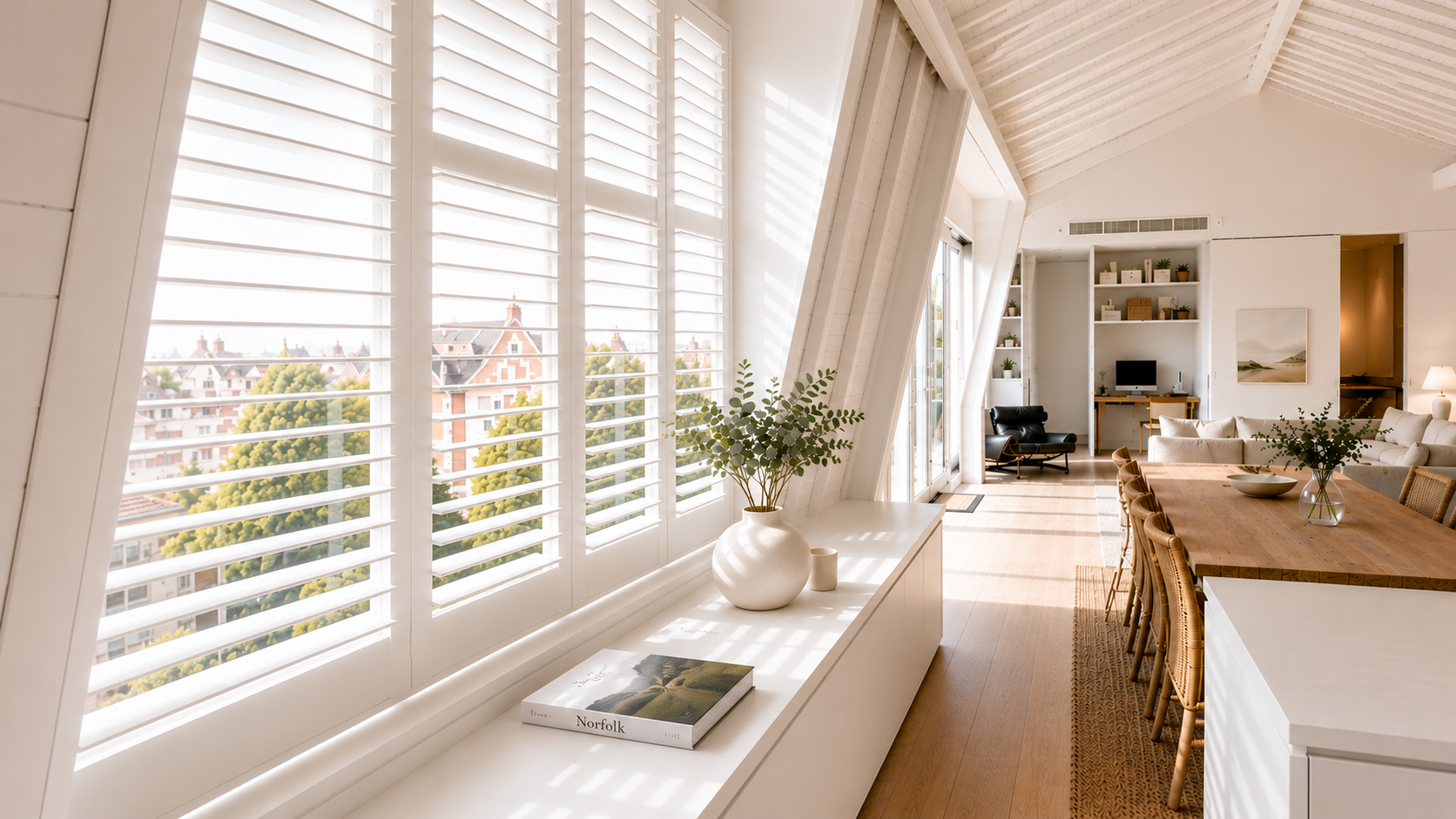
In warmer contemporary interiors, softer whites and natural-looking neutral shades can sit particularly well alongside oak, stone, textured fabrics and earthy wall colours.
Period properties allow more flexibility. Victorian and Edwardian rooms can look excellent with traditional white shutters, particularly around sash or bay window shutters, but carefully chosen heritage-inspired colours can also complement deeper wall shades and original architectural features.
For kitchens and open-plan living spaces, consider the cabinetry. Shutters that complement rather than exactly replicate kitchen units can create a cohesive finish without making the room feel overly coordinated.
The same principle applies to bedrooms: if you expect to redecorate regularly, a neutral shutter usually gives you more freedom than a strong statement colour.

Do White Shutters Let More Light into a Room?
The colour of the shutter doesn’t determine how much daylight enters through the window; louvre position, panel configuration and shutter design have a much greater effect.

However, light-coloured shutters reflect more of the available light back into the room, whereas darker surfaces absorb more light. This means white shutters can contribute to a brighter overall appearance.
If maximising natural light is important, colour should therefore be considered alongside the design.
Larger louvres can provide a more open view when tilted, while café-style shutters leave the upper portion of the window uncovered. Tier-on-tier shutters allow the upper and lower sections to operate independently.
For a street-facing living room, for example, you might keep the lower louvres angled for privacy while allowing more daylight through the upper section.
This ability to balance privacy and daylight is one of the main reasons homeowners choose fitted shutters rather than conventional curtains.

Will Coloured Shutters Make a Room Look Smaller?

Not necessarily.
A dark shutter creates more visual contrast than a white one, so it can make the window feel more prominent. In a small or naturally dark room, that may create a heavier appearance.
In a larger, well-lit space, the same dark shutters can instead add definition and architectural interest.
Window size also matters. A large bay can comfortably carry a stronger colour in a way that a small window sometimes cannot.
If you’re unsure, consider three things: how much daylight the room receives, how large the shutter installation will be, and whether you want the window to blend in or become a focal point.
Are White or Coloured Wooden Shutters More Practical?
For most households, there is little difference in everyday operation. Both require straightforward dusting and occasional gentle wiping according to the product’s care guidance.
The more important consideration is the underlying shutter material and quality of finish.
Totally Shutters uses Paulownia wood for its made-to-measure wooden shutters. Its lightweight construction makes it well suited to interior shutter panels, while a quality painted finish creates the smooth appearance expected from a premium fitted product.
For bathrooms or other areas with significant moisture, material suitability should be considered separately from colour. A shutter can look perfect for the room while being made from the wrong material for persistent humidity.

White or Coloured Shutters: Which Should You Choose?
If you want a timeless option that works with changing interiors, white, off-white or another light neutral is usually the strongest choice.
Choose coloured shutters when you have a clear interior scheme and deliberately want the windows to have more visual presence.
For a long-term decision, consider:
- Natural light: lighter finishes can help reflect available daylight.
- Room size: stronger colours tend to have more visual impact.
- Existing joinery: consider window frames, doors, skirting and cabinetry.
- Future decorating: neutral shutters provide greater flexibility if walls and furniture change.
- Window proportions: large bays and statement windows can often carry stronger colours particularly well.

The objective isn’t simply to choose the most fashionable colour. Well-designed made-to-measure shutters should still look appropriate long after today’s interior trends have moved on.

Find the Right Shutter Finish for Your Home
If you’re deciding between white and coloured shutters, seeing finishes alongside your own interior can make the choice much easier.
Totally Shutters provides made-to-measure interior plantation shutters for homeowners across London, Kent and surrounding areas. Request a free home survey or speak to the team about the right colour, louvre and panel configuration for your windows.
Our experienced team is here to help.
Get Started Today
Call us on 020 3960 6963
Email sales@totallyshutters.co.uk
Visit www.totallyshutters.co.uk
Or request a free home survey and receive expert advice tailored to your property.
FAQs:
White and off-white finishes are enduring choices because they work with a wide range of interiors and window styles. The best shade of white depends on the undertones already present in your walls, flooring and joinery.
They don’t have to, but closely coordinating the two can create a clean, integrated appearance. A contrasting shutter colour is better suited to homeowners who deliberately want to emphasise the window.
Yes. Coloured shutters can look particularly effective across a large bay, where the window is already an important architectural feature. Consider the amount of natural light and the size of the installation before choosing a particularly dark finish.


