




White vs Coloured Shutters: What Works Best in Modern Interiors?

Split-screen living room: left bright, white-sofa interior with white window shutters and greenery; right moody, dark-toned space with black shutters and dark sofa.

Choosing a shutter colour can feel surprisingly difficult. White plantation shutters are timeless and easy to coordinate, but coloured shutters can create a more individual, design-led finish.

So, which works best in a modern interior?

For most UK homes, white or warm neutral shutters remain the most versatile choice, particularly if you want to maximise light and create a clean, lasting finish. Coloured shutters can work exceptionally well when you want the window to become a deliberate part of the interior scheme rather than quietly blending into it.

The right choice depends on your natural light, wall colours, window proportions and how frequently you expect to redecorate.

Why Are White Plantation Shutters So Popular?

White shutters work because they rarely compete with the rest of the room.

Unlike curtains, which can introduce large areas of pattern or colour, interior window shutters become an architectural part of the window. A white or off-white finish tends to blend naturally with window frames, skirting boards and other joinery.

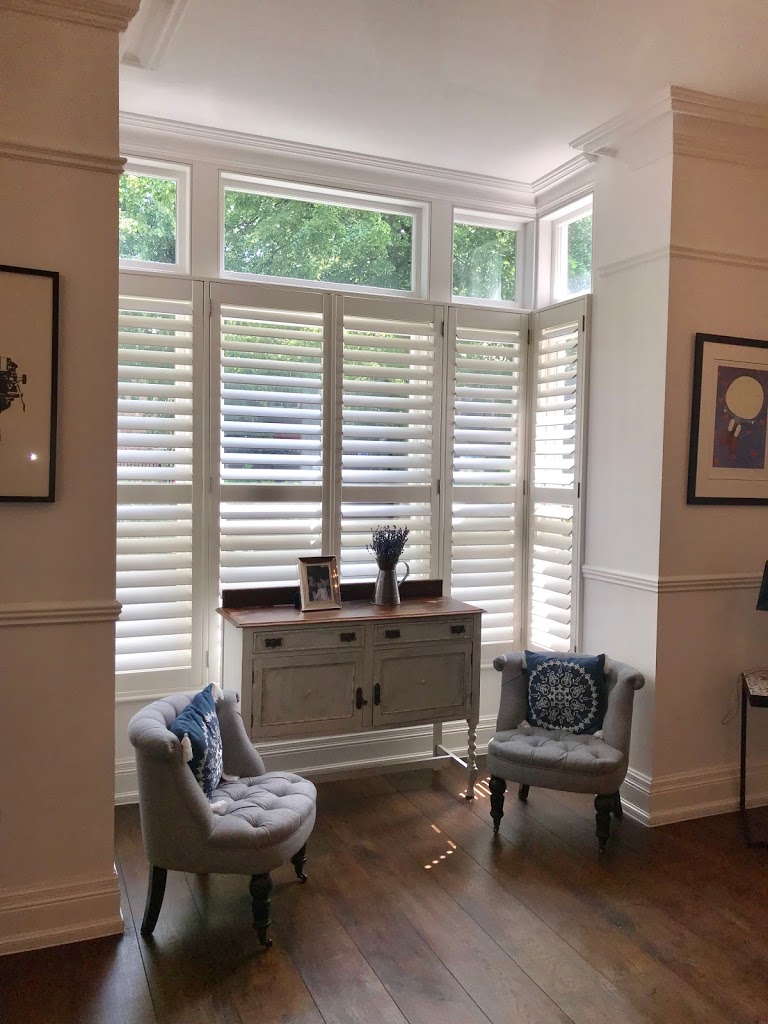
Light finishes can also help a room feel brighter because they reflect rather than absorb daylight. This can be particularly effective around bay windows or in rooms where natural light is limited.

White shutters are especially useful if you:

  • Regularly change furniture, paint colours or accessories
  • Want the shutters to remain relatively neutral
  • Have a smaller or darker room
  • Prefer a clean contemporary interior
  • Want a colour that works with both modern and period properties

However, white doesn’t necessarily mean stark brilliant white. The undertone matters.

A cool white may suit crisp grey or contemporary schemes, while a softer off-white can sit more comfortably alongside warmer neutrals, natural timber and traditional interiors.

When Do Coloured Shutters Work Better?

Coloured shutters work best when the colour feels intentional.

Rather than treating the shutters simply as a window covering, you can use them as part of the wider interior design. Deep neutrals, muted greens, greys and other carefully chosen shades can frame a window and add depth to a room.

They can be particularly effective in larger spaces where there is enough natural light to support a stronger colour.

One useful approach is to coordinate the shutters with another permanent feature in the room, such as fitted cabinetry, wall panelling or painted joinery. This tends to create a more considered result than trying to match temporary furnishings such as cushions or rugs.

The potential disadvantage is longevity. A distinctive colour you love today may be harder to accommodate if you completely change the room in five years.

Because quality made-to-measure plantation shutters are intended to remain in place for many years, it is worth thinking beyond current interior trends.

Should Shutters Match Your Walls or Window Frames?

There is no rule that shutters must exactly match either, but the relationship between the colours matters.

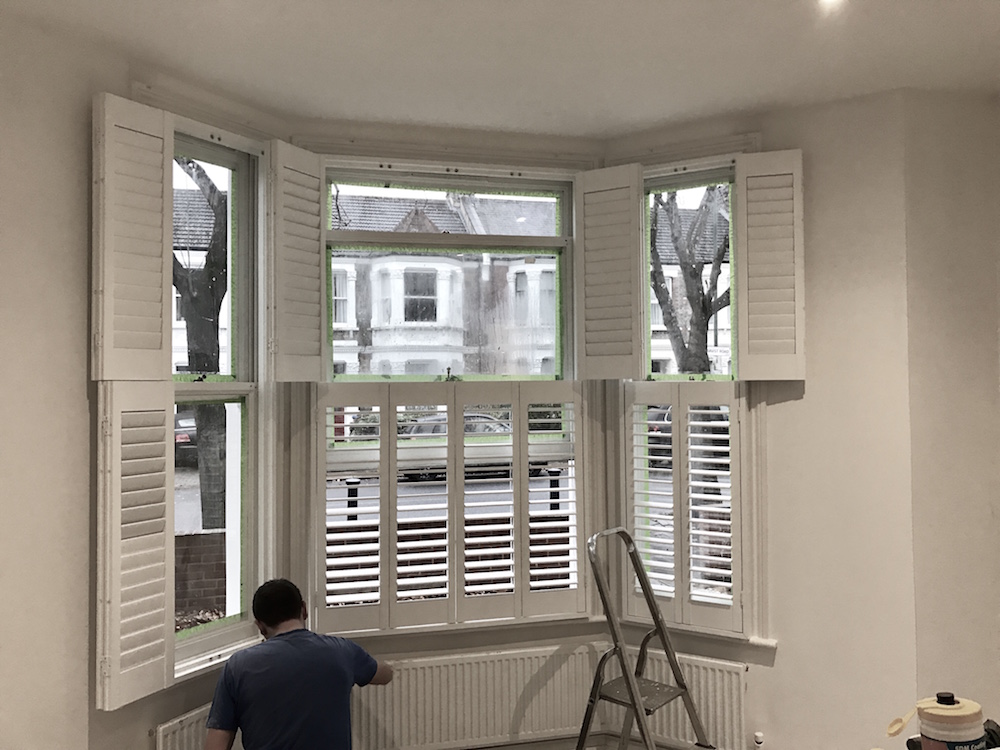
Matching or closely coordinating shutters with the window frame creates a seamless appearance. The eye sees the window and shutters as one feature, which is particularly effective for minimalist interiors.

Matching shutters more closely to the walls can also work. This reduces contrast and can make the shutters feel integrated into the room rather than visually framing the window.

Modern kitchen with blue cabinets and large black-framed windows with shutters; sink and countertop visible.

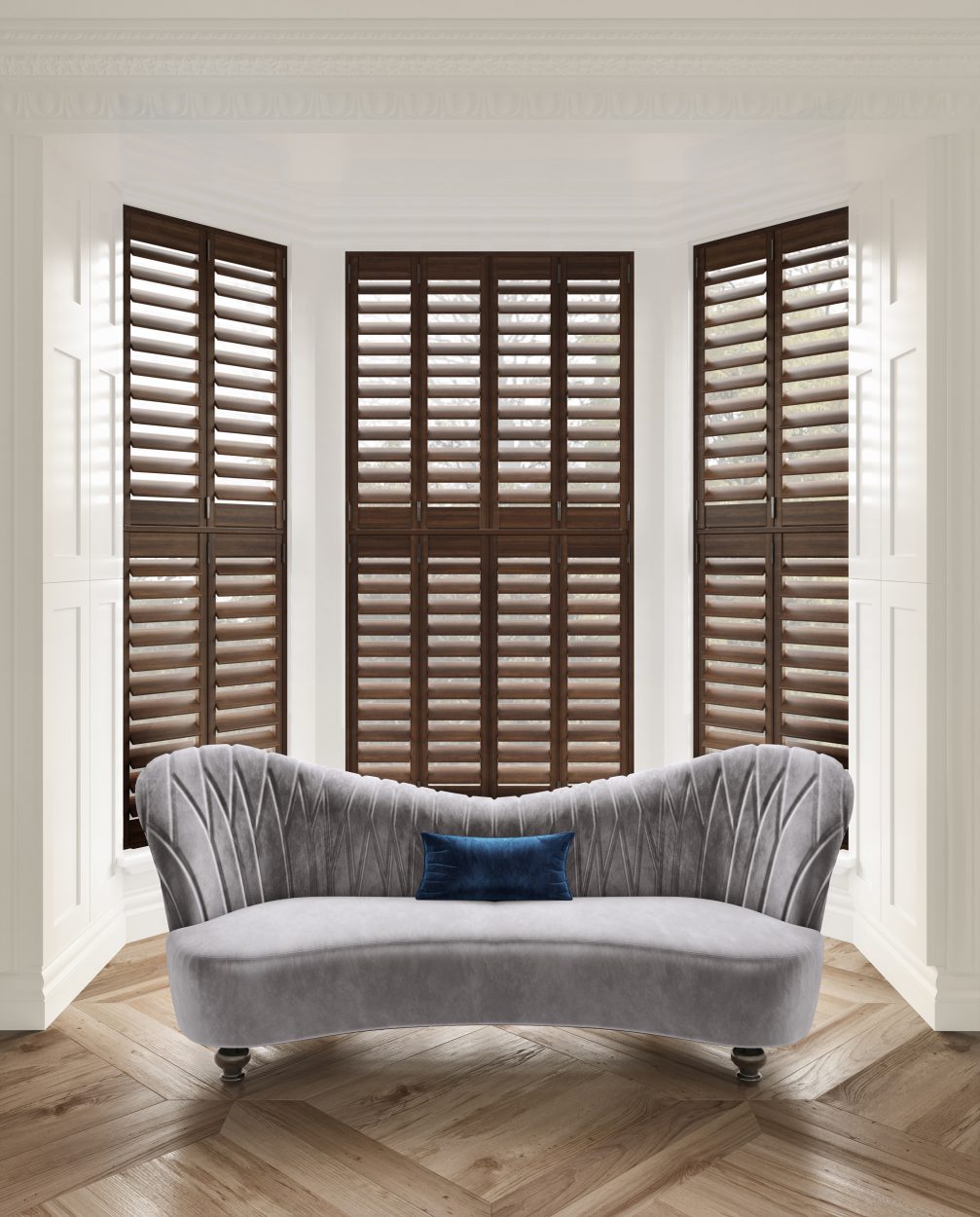
Contrast creates a different effect. Dark shutters against pale walls draw attention towards the window and emphasise its proportions. This can look striking on a large window or architectural bay but may feel heavier in a small room.

Samples are particularly valuable here. Colours can look very different beside your actual walls and flooring than they do on a screen.

At Totally Shutters, we help homeowners consider the shutter finish alongside the room itself during the made-to-measure process, rather than treating colour as an isolated decision.

Which Shutter Colours Work Best with Different Interior Styles?

For a modern minimalist interior, white, off-white and understated neutral shutters are usually the safest choices. They preserve clean lines and allow furniture, artwork and materials to provide the visual interest.
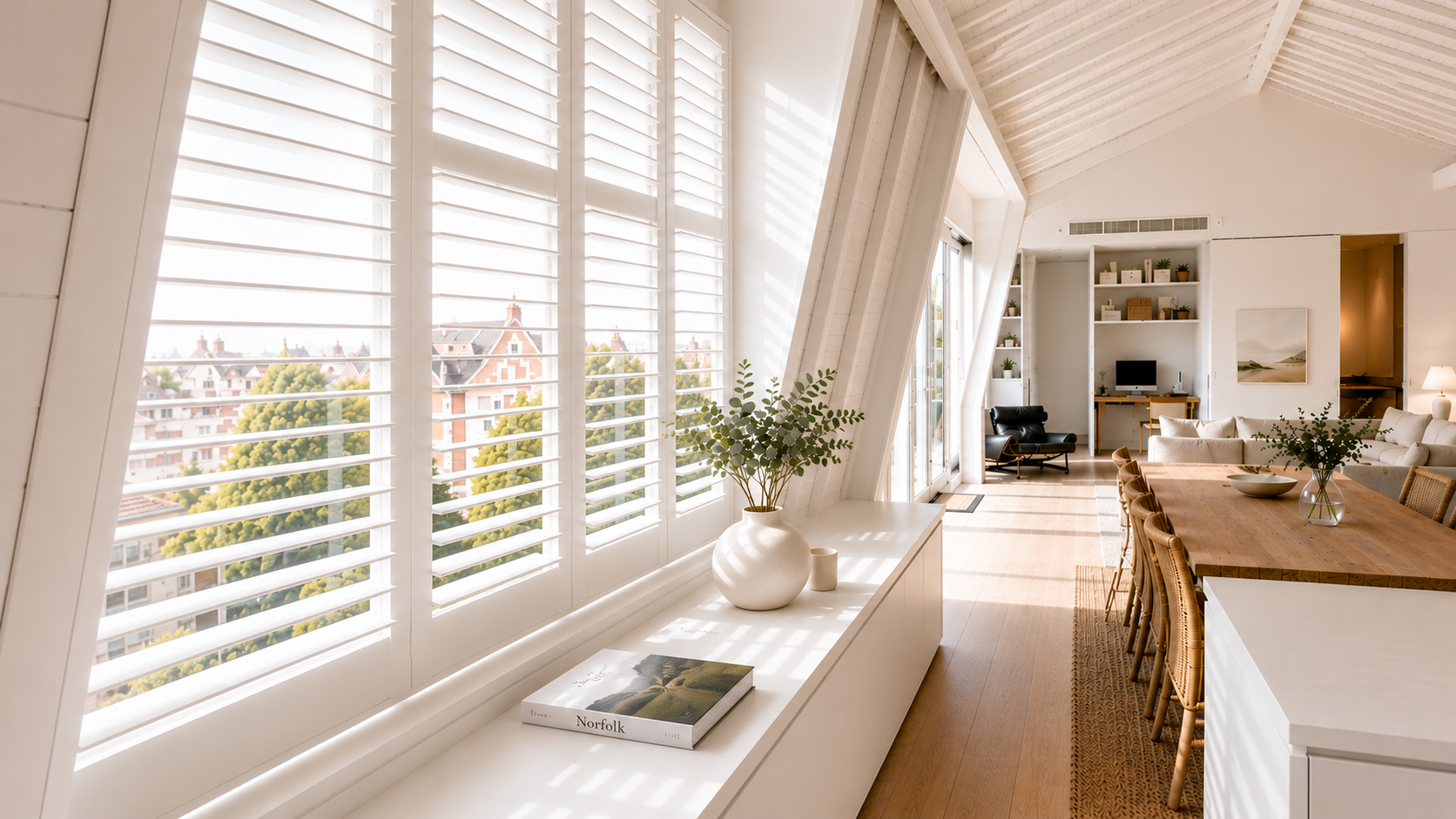
In warmer contemporary interiors, softer whites and natural-looking neutral shades can sit particularly well alongside oak, stone, textured fabrics and earthy wall colours.

Period properties allow more flexibility. Victorian and Edwardian rooms can look excellent with traditional white shutters, particularly around sash or bay window shutters, but carefully chosen heritage-inspired colours can also complement deeper wall shades and original architectural features.

For kitchens and open-plan living spaces, consider the cabinetry. Shutters that complement rather than exactly replicate kitchen units can create a cohesive finish without making the room feel overly coordinated.

The same principle applies to bedrooms: if you expect to redecorate regularly, a neutral shutter usually gives you more freedom than a strong statement colour.

Do White Shutters Let More Light into a Room?

The colour of the shutter doesn’t determine how much daylight enters through the window; louvre position, panel configuration and shutter design have a much greater effect.

However, light-coloured shutters reflect more of the available light back into the room, whereas darker surfaces absorb more light. This means white shutters can contribute to a brighter overall appearance.

If maximising natural light is important, colour should therefore be considered alongside the design.

Larger louvres can provide a more open view when tilted, while café-style shutters leave the upper portion of the window uncovered. Tier-on-tier shutters allow the upper and lower sections to operate independently.

For a street-facing living room, for example, you might keep the lower louvres angled for privacy while allowing more daylight through the upper section.

This ability to balance privacy and daylight is one of the main reasons homeowners choose fitted shutters rather than conventional curtains.

Will Coloured Shutters Make a Room Look Smaller?

Not necessarily.

A dark shutter creates more visual contrast than a white one, so it can make the window feel more prominent. In a small or naturally dark room, that may create a heavier appearance.

In a larger, well-lit space, the same dark shutters can instead add definition and architectural interest.

Window size also matters. A large bay can comfortably carry a stronger colour in a way that a small window sometimes cannot.

If you’re unsure, consider three things: how much daylight the room receives, how large the shutter installation will be, and whether you want the window to blend in or become a focal point.

Are White or Coloured Wooden Shutters More Practical?

For most households, there is little difference in everyday operation. Both require straightforward dusting and occasional gentle wiping according to the product’s care guidance.

The more important consideration is the underlying shutter material and quality of finish.

Totally Shutters uses Paulownia wood for its made-to-measure wooden shutters. Its lightweight construction makes it well suited to interior shutter panels, while a quality painted finish creates the smooth appearance expected from a premium fitted product.

For bathrooms or other areas with significant moisture, material suitability should be considered separately from colour. A shutter can look perfect for the room while being made from the wrong material for persistent humidity.

White or Coloured Shutters: Which Should You Choose?

If you want a timeless option that works with changing interiors, white, off-white or another light neutral is usually the strongest choice.

Choose coloured shutters when you have a clear interior scheme and deliberately want the windows to have more visual presence.

For a long-term decision, consider:

  • Natural light: lighter finishes can help reflect available daylight.
  • Room size: stronger colours tend to have more visual impact.
  • Existing joinery: consider window frames, doors, skirting and cabinetry.
  • Future decorating: neutral shutters provide greater flexibility if walls and furniture change.
  • Window proportions: large bays and statement windows can often carry stronger colours particularly well.


The objective isn’t simply to choose the most fashionable colour. Well-designed made-to-measure shutters should still look appropriate long after today’s interior trends have moved on.

Find the Right Shutter Finish for Your Home

If you’re deciding between white and coloured shutters, seeing finishes alongside your own interior can make the choice much easier.

Totally Shutters provides made-to-measure interior plantation shutters for homeowners across London, Kent and surrounding areas. Request a free home survey or speak to the team about the right colour, louvre and panel configuration for your windows.

Our experienced team is here to help.

Get Started Today
Call us on 020 3960 6963
Email sales@totallyshutters.co.uk
Visit www.totallyshutters.co.uk

Or request a free home survey and receive expert advice tailored to your property.

FAQs:

White and off-white finishes are enduring choices because they work with a wide range of interiors and window styles. The best shade of white depends on the undertones already present in your walls, flooring and joinery.

They don’t have to, but closely coordinating the two can create a clean, integrated appearance. A contrasting shutter colour is better suited to homeowners who deliberately want to emphasise the window.

Yes. Coloured shutters can look particularly effective across a large bay, where the window is already an important architectural feature. Consider the amount of natural light and the size of the installation before choosing a particularly dark finish.

Wooden vs MDF Shutters: Which Is Best for UK Homes?

Choosing shutters for your home often begins with colour and style, but the material behind the finish matters just as much.
Two of the most commonly discussed options are wooden window shutters and MDF shutters. At first glance, they can look similar, particularly when both are painted white. However, their weight, construction, long-term performance and suitability for different windows can vary considerably.

For homeowners comparing plantation shutters for a living room, bedroom, bay window or period property, the key question is simple:

Should you choose real wood or MDF?

Quick Answer: are wooden or MDF shutters better?

Wooden shutters are generally the stronger choice for homeowners who want a lighter, more refined and versatile made-to-measure product. MDF can provide a lower-cost solution for some standard windows, but it is heavier and may offer fewer design options.

Totally Shutters uses Paulownia wood for its plantation shutters rather than MDF. Paulownia is selected for its light weight, stability and smooth painted finish, making it well suited to custom shutter panels, larger openings and high-quality interior installations.

The best choice ultimately depends on your window size, budget, preferred finish and how long you expect the shutters to remain in your home.

What are wooden plantation shutters?

Wooden plantation shutters are internal window coverings made from natural timber. They consist of frames, hinged panels and adjustable horizontal slats known as louvres.

The louvres can be tilted to control natural light and privacy, while the panels can usually be opened when an unobstructed window is required.

Wooden shutters may be configured as:

  • Full-height shutters covering the entire window
  • Tier-on-tier shutters with independently opening upper and lower panels
  • Café-style shutters covering only the bottom section
  • Solid-panel shutters
  • Tracked or folding shutters for wide openings
  • Bespoke shutters for bay, curved or unusually shaped windows

At Totally Shutters, the principal timber used is Paulownia wood.

What are wooden plantation shutters?

Paulownia is a lightweight timber used for furniture, joinery and interior shutter manufacturing. Its relatively low weight makes it particularly useful where multiple shutter panels need to open and close smoothly without placing unnecessary strain on hinges or frames.

For plantation shutters, Paulownia offers several practical benefits:

  • It is lighter than many traditional hardwoods.
  • It can be manufactured into stable shutter components.
  • It accepts painted finishes well.
  • It is suitable for made-to-measure panel designs.
  • Its low weight can be advantageous on wide windows and bay configurations.

A professional survey remains important because the correct panel count, frame style and hinge arrangement must still be selected for the window.

What are MDF shutters?

MDF stands for medium-density fibreboard. It is an engineered material produced by combining wood fibres with resin and compressing them into dense boards.

In shutter manufacturing, MDF components are usually coated or painted to create a smooth surface. From a distance, a well-finished MDF shutter can resemble a painted wooden shutter.

MDF is commonly used because it can offer:

  • A smooth, consistent painted finish
  • Competitive pricing
  • Good performance on straightforward window shapes
  • A practical option for customers prioritising initial cost

However, MDF is significantly heavier than lightweight timber and is not always the most suitable material for large panels, unusual shapes or more complex made-to-measure designs.

Wooden vs MDF shutters: the main differences

Are wooden shutters more durable than MDF shutters?

Quality wooden shutters can provide excellent long-term performance when they are correctly manufactured, professionally fitted and used in an appropriate room.

Natural timber is often preferred for premium shutter installations because it combines strength with lower weight. Lighter panels can place less strain on hinges and frames during regular use.

MDF can also perform reliably on suitable standard windows. However, its greater weight means that careful panel design is important. Very wide MDF panels may be impractical, and manufacturers may divide a large opening into more sections to manage the load.

Durability is influenced by more than the core material. Homeowners should also consider:

  • The quality of the hinges and fixings
  • The construction of the shutter frame
  • Panel width and height
  • The standard of installation
  • Exposure to moisture
  • How frequently the panels are opened
  • Cleaning and general care

Which material gives the better finish?

Both materials can provide a neat painted appearance, but real wood usually offers a more refined result for homeowners seeking a premium interior feature.

Paulownia shutters can be finished in popular shades such as white, off-white and soft neutral colours. The timber construction also allows the shutters to retain the feel of a fitted joinery product rather than a mass-produced window covering.

MDF has a very uniform surface, which can suit simple painted shutters. However, customers looking for custom colours, larger panels or more detailed bespoke designs may find that real wood offers greater flexibility.

During a professional home survey, Totally Shutters can help homeowners compare colours, louvre sizes, panel layouts and frame options in the context of the room.

Are wooden shutters better for large windows and bay windows?

Wooden shutters are often the more practical choice for large windows, bay windows and complex openings because lightweight timber allows greater flexibility in panel design.

Bay windows require more than simply measuring the width and height of the glass. A shutter specialist will normally assess:

  • The number and angle of each bay section
  • Window handles and projecting fittings
  • Sill depth
  • Frame position
  • Panel opening space
  • The location of mullions
  • Suitable panel widths
  • Whether panels should fold or open individually

Because Paulownia is lightweight, it can be well suited to multi-panel bay installations where smooth operation matters.

box-bay-window-shutters

MDF may still be used by other suppliers on certain bays, but its weight can result in additional panel divisions. This can affect the sightlines and the amount of frame visible across the window.

Homeowners comparing wooden shutters for bay windows should therefore look beyond the headline price and consider how the finished panel layout will appear.

Which shutters are best for Victorian and Edwardian homes?

Wooden plantation shutters are particularly well suited to many Victorian and Edwardian properties.

These homes often feature:

  • Tall sash windows
  • Angled or square bay windows
  • Generous ceiling heights
  • Decorative architraves
  • Street-facing reception rooms

A lightweight wooden shutter can complement these proportions without introducing the visual bulk of heavy curtains.

For a street-facing bay, café-style shutters may provide privacy across the lower section while leaving the upper glass open. Full-height or tier-on-tier shutters provide more complete coverage and greater flexibility at night.

The correct choice depends on overlooking, room use and the original window proportions.

Are MDF shutters suitable for every room?

No.

MDF shutters are best treated as a material for appropriate, relatively dry interior spaces and straightforward installations.

They may be considered for:

  • Standard bedroom windows
  • Living-room windows
  • Smaller rectangular openings
  • Projects where initial budget is the main concern

They are generally less suitable for:

  • Bathrooms with high humidity
  • Wet rooms
  • Complex special shapes
  • Very wide panels
  • Installations requiring particularly lightweight operation.

It is important not to assume that either MDF or natural wood is automatically suitable for a high-moisture room.

What shutters should you use in bathrooms?

Bathrooms require a material specifically designed to cope with humidity, condensation and occasional splashes.

Even though Totally Shutters uses Paulownia wood for most interior rooms, a moisture-resistant shutter material is normally more appropriate for bathrooms and other high-humidity spaces.

The exact recommendation should take account of:

  • Distance from the bath or shower
  • Ventilation
  • Frequency of condensation
  • Whether the window is regularly opened
  • The level of direct water exposure.

Homeowners should discuss bathroom conditions during the survey rather than choosing solely by appearance.

Which Looks Better?Do wooden shutters offer better light control than MDF?

The material itself does not determine light control. Light management depends more heavily on the shutter configuration, louvre size, frame design and quality of fit.

Both wooden and MDF shutters can use adjustable louvres. However, made-to-measure wooden shutters may offer greater design flexibility across unusual windows and larger openings.

Useful choices include:

Wider louvres

Wider louvres can create a more open view and allow generous daylight when tilted.

Narrower louvres

Narrower louvres create a more traditional appearance and may suit smaller sash windows.

Full-height shutters

These cover the complete opening and provide consistent control across the window.

Tier-on-tier shutters

These divide the shutter into upper and lower sections that can operate independently.

Café-style shutters

These cover the lower part of the window, maintaining street-level privacy while leaving the upper glass clear.

cafe-style-shutter

The best arrangement should align the shutter rails and panel divisions with the existing window wherever possible.

Do wooden shutters provide better insulation?

Well-fitted internal shutters can create an additional layer between the room and the glass. However, homeowners should be cautious about broad claims regarding guaranteed energy savings.

Insulating performance depends on:

  • The existing window
  • Gaps around the frame
  • Shutter fit
  • Panel configuration
  • Whether the shutters are closed
  • The age and condition of the property

Wood is naturally less conductive than some materials, but the overall installation matters more than the material alone.
Shutters should therefore be viewed as a useful supplementary window covering rather than a replacement for appropriate glazing, draught proofing or other energy-efficiency improvements.

Are wooden shutters easier to maintain?

Both wooden and MDF shutters are relatively easy to maintain compared with fabric curtains.

Routine care normally involves:

  1. Dusting the louvres with a soft cloth or suitable duster.
  2. Wiping marks with a lightly damp cloth.
  3. Drying the surface promptly.
  4. Avoiding abrasive cleaners.
  5. Checking that hinges and panels remain aligned.

Natural wood should not be saturated with water. MDF shutters also require care because damage to their outer coating can expose the engineered core.

Where maintenance is concerned, prevention is more important than intensive cleaning.

Wooden shutters vs MDF shutters: which offers better value?

MDF may cost less initially, but Paulownia wooden shutters can offer stronger long-term value for customers prioritising lighter operation, bespoke design and a premium finish.

1.14

Value should not be judged by price alone. Consider:

  • How long you intend to remain in the property
  • Whether the window is a standard shape
  • The size and number of panels
  • The importance of finish quality
  • How often the shutters will be operated
  • Whether you want custom colours
  • Whether the installation is intended to be a lasting interior feature

For a short-term renovation or a small standard window, MDF may appear attractive on price.

For a prominent bay, large opening or carefully designed interior, made-to-measure wooden shutters may represent the more suitable investment.

How much do wooden and MDF shutters cost?

The final cost of shutters is normally influenced by the complete specification rather than the material alone.

A quotation may take account of:

  • Overall window dimensions
  • Number of openings
  • Material
  • Shutter style
  • Panel count
  • Louvre size
  • Frame design
  • Custom colour
  • Special shapes
  • Bay angles
  • Access
  • Installation requirements
Bay windows, curved bays, French doors and unusually shaped openings often require more detailed measurement and fitting than a simple rectangular window.
Modern bay window shutters in neutral-toned living space

Supply-only shutters may appear cheaper than a fully surveyed and installed service, but the comparison is not always like for like. 

Professional measurement can reduce the risk of poor alignment, restricted opening or unsuitable panel proportions.

Totally Shutters provides made-to-measure advice based on the actual window rather than relying on a broad online estimate. Homeowners can request a free home survey for an accurate quotation.

Are wooden shutters better than blinds or curtains?

Wooden shutters, blinds and curtains each create a different result.

Wooden shutters are particularly attractive where the homeowner wants the window treatment to feel like part of the architecture.

Blinds may suit smaller budgets or spaces where a discreet covering is preferred. Curtains remain useful where softness, pattern or layered insulation is important.

Some homeowners combine shutters with curtains, using shutters for privacy and light control and curtains for decorative framing.

Should you choose wooden or MDF shutters?

Choose Paulownia wooden shutters if you want:

  • A lightweight shutter system
  • A premium fitted appearance
  • Made-to-measure flexibility
  • Shutters for a bay or larger window
  • Custom design options
  • A long-term interior feature

Consider MDF shutters from an alternative supplier if:

  • Your window is small and straightforward
  • Initial price is the dominant concern
  • You are comfortable with a heavier engineered material
  • You do not require complex shapes or particularly wide panels

For most customers approaching Totally Shutters, the recommendation is clear: Paulownia wooden shutters provide the combination of weight, finish and bespoke flexibility that suits the company’s made-to-measure approach.

Why professional surveying and installation matter

shutter-terminology

Even the best material can perform poorly if the shutters are incorrectly measured or fitted.

During a professional survey, a shutter specialist will normally assess:

  • Window dimensions at several points
  • Out-of-square openings
  • Handles, locks and vents
  • Sill depth
  • Suitable frame position
  • Panel count and folding direction
  • Louvre clearance
  • Bay angles
  • Access for fitting

These details influence how the shutters look and operate.

Professional installation is also important for accurate alignment. Panels should open smoothly, sit consistently within the frame and close without unnecessary gaps or strain.

Wooden window shutters for UK homes:
the final verdict

For UK homeowners comparing materials, wooden window shutters are generally the better choice where quality, low weight, bespoke design and long-term appearance matter most.

MDF can suit some standard windows and lower initial budgets, but its heavier construction and more limited versatility may be less appropriate for large bays, unusual shapes and premium interior projects.

Totally Shutters uses Paulownia wood because it supports a lightweight, made-to-measure shutter system with a smooth, refined finish. The right design will still depend on your window dimensions, room conditions and preferred shutter style, so an accurate home survey remains an essential part of the process.

Considering wooden plantation shutters for your home?

Totally Shutters can help you compare shutter styles, louvre sizes, panel configurations and suitable materials before preparing a made-to-measure quotation.

Our experienced team is here to help.

Get Started Today
Call us on 020 3960 6963
Email sales@totallyshutters.co.uk
Visit www.totallyshutters.co.uk

Or request a free home survey and receive expert advice tailored to your property.

FAQs:

Wooden shutters are usually better for homeowners seeking lighter panels, bespoke configurations and a premium finish. MDF may offer a lower initial price for certain standard windows, but it is heavier and may be less flexible for large or unusually shaped openings.

Totally Shutters uses Paulownia wood for its interior plantation shutters. Paulownia is selected for its low weight, stability and suitability for smooth painted finishes.

No. Totally Shutters focuses on Paulownia wooden shutters rather than MDF. This supports the company’s made-to-measure, premium approach.

Yes. Lightweight wooden shutters can be particularly suitable for bay windows because the panels can be designed around the individual sections and angles of the bay. A professional survey is required to plan the frame and panel layout accurately.

Natural wood is not normally the first recommendation for a bathroom with persistent humidity or direct water exposure. A specialist moisture-resistant shutter material is usually more suitable, depending on the room’s ventilation and layout.

MDF shutters are often priced lower than real wood options. However, the total quotation also depends on window size, shutter style, panel count, finish, shape and installation requirements.

A precise lifespan cannot be guaranteed because it depends on product quality, installation, use and maintenance. Well-made wooden shutters are intended to be a durable, long-term fitted window covering.

Made-to-measure shutters are normally better for bay windows, out-of-square openings, large windows and homes where panel alignment is important. Professional surveying and fitting also reduce the risk of incorrect measurements or restricted panel movement.

4 Hot Interior Trends Right Now

tier-on-tier-plantation-shutters

Many homeowners like to stay on top of interior design trends, incorporating “what’s hot” into their home styling. At Totally Shutters, we have been keeping our finger on the pulse of interior trends to consider for your home:

Bold primary colours

Contrasting two or three primary colours against an understated background can create a striking visual in your room, impacting both the room’s space and shape.

A simple way to inject colour and make a statement into your room is with plantation shutters, available in a range of different colours and finishes, as well as our custom colour service.

Shabby chic

The shabby chic interior trend is here to stay. The interior trend adds character to a room and can be achieved through multiple avenues including, exposing wood or brickwork on walls and furniture or usage of vintage throws and cushions.

With shabby chic, the busier the room, the more character the space. Stained wooden plantation shutters complement this design.

Statement vases

Statement vases are a great way to add something different to your room. Depending on your preference, you can go as big and as bold as you like. Big statement vases will give your room a design feature and provide a talking point. They also look great on your windowsill, in front of plantation shutters.

Bring the outdoors in

Another timeless interior design trend is plants. As people have been spending more time at home due to lockdown, there has been a significant increase in plants around the home. From indoor plants and flowers to herbs, there are plenty of choices for your home.

For more information on wooden plantation shutters or to book your free no obligation in-house survey, call Totally Shutters today on 0203 960 6963. All window shutters come with a 5-year guarantee.

Keeping Cool With Your Plantation Shutters

box-window-shutter-install

The UK has experienced some extraordinary weather changes and temperatures over the last few weeks, with temperatures reaching over 39 degrees in some areas.

As many of us struggled to sleep at night or work from home during the day, we know you will have been clutching on ways to keep cool. So here are some tips to stay cool on days where the heat feels too hot to handle:

Plantation shutters

Plantation shutters are ideal for warm days when temperatures are soaring, as they are fantastic for helping with temperature control in rooms. Closing your shutters in front of an open window will ensure that a breeze can still blow through the room and keep the room ventilated while the angling of the slats will prevent light from shining through.

As plantation shutters increase privacy levels, you can wear whatever you need to ensure your body temperature is cool without passersby observing.

Fans

There is a range of options when it comes to home fans. However, putting a bowl of ice in front of the fan is a great way to ensure that cold air is blowing on you when positioned correctly. Another option is to have a mister spray bottle next to the bed and occasionally spray yourself to cool down.

Lower your duvet tog

Many of us have a preference for our duvet thickness, but for a good night’s sleep, the ideal duvet may change throughout the year. For hot summer months, a duvet tog of 1.0-4.5 is recommended for keeping cool on an evening. Whereas a mid-range tog of 7.0-10.5 is ideal for autumn and spring.

For more information on plantation shutters for summer or to book your free no obligation in-house survey, call Totally Shutters today on 0203 960 6963. All window shutters come with a 5-year guarantee.

Choose Wooden Shutters for Your Home

For all-year-round cosiness in your home, choose wooden shutters. They add a touch of luxury, warmth and character to your windows. Here’s how to create your ideal look with our hardwood shutter range.

Why wooden shutters?

Whether stained or painted, wooden plantation shutters are the most practical and stylish window dressing. They give you complete control over light and privacy, they offer excellent heat insulation, and they’re easy to maintain.

Made-to-measure, plantation shutters are made to fit your window and designed to match your interior. Wooden shutters come in a variety of different shades and can be stained in warmer colours to add a glowing look at your window all year round.

Wooden shutters for all interiors

Wooden shutters compliment all properties and interiors too. For a rustic, industrial interior, dark plantation shutter stains will flatter the scheme. Whereas for a French-chic interior, a cafe style wooden shutters in a subtle wooden stain would look ideal.

If you’re the type that likes to change your interior every few years, wooden shutters are timeless and will suit any decor scheme change over the years. White shutters are our most popular plantation shutter option as the clean edge suits all decorations.

For more information on wooden plantation shutters or to book your free no obligation in-house survey, call Totally Shutters today on 0203 960 6963. All wooden window shutters come with a 5-year guarantee.

Ticking Off Your Home Renovations

office-shutters

Home renovations are stressful, as your home becomes a building site, and lengthy works can leave you feeling hopeless as though there is no end in sight. Many of our customers choose to invest in plantation shutters while undergoing home renovations as the finishing touch to work undergone.

Whether you’re undergoing renovations and at a standstill with the amount of work that needs requiring, or seeing the light at the end of the tunnel of works, here are some tips from our shutter specialists to help you pull through:

Focus on your priorities

Home renovations can get overwhelming very quickly. A great way to keep grounded is to set your priorities and keep yourself focused on them. Although, it’s exciting for your dream interiors to become a reality, not everything needs to be complete at once.

Get the basics out of the way first; walls, floors, windows and their dressings. Home decoration can sway your attention or budget, but decoration is not a key component of your interior, it’s worth investing in longer lasting components for a little more for better quality.

Organise your time and budget

When it comes to home renovations, some things can be delayed or be more costly due to unforeseen circumstances. Keep this in mind when you’re organising timings and budgets.

You will likely have your budget set early in the process, so try to stick to this figure as the renovations take place. Keeping a spreadsheet to keep on top of finances is a good idea.

Trust your experts

If you have paid for experts to complete work, such as our shutter specialists, trust their experience and enjoy the moment to kick back and relax whilst they do their thing. You will be able to enjoy looking through the finished works once completed.


For more information on installing plantation shutters during your home renovations or to book your free no obligation in-house survey, call Totally Shutters today on 0203 960 6963. All plantation shutters come with a 5-year guarantee.

What is the Best Window Coverings for Large Windows?

shutters-hinged-window

Do you have large windows in your home and are wondering what the best window coverings for large windows are? Are you looking for a low maintenance treatment that offers practicality whatever the weather while looking exceptionally stylish and elegant? There is a perfect solution available, and it is plantation shutters.

Best Window dressings for large windows

Window dressings include curtains, drapes, different types of blinds and plantation shutters. However, the only window dressing that can stand the test of time while offering outstanding practicality is plantation shutters.

Plantation shutters are constructed with horizon panels called louvres that can be easily adjusted to open or close according to your preference. There is a wide range of styles available, including tier-on-tier, full height, cafe-style and solid panels, made from a range of materials from hardwood, medium-density fibreboard (MDF) and PVC.

Shutters on tracks

For large windows and patio doors, shutters on tracks are the ideal window covering. When combined with a tracked system, full height shutters create a stylish, timeless, suitable all year round and practical solution. The panels can be guided and supported in two ways:

Bi-fold

Supported by rollers at the top of a single track and a single guide channel at the bottom, bi-fold shutters fold back in a concertina form to allow full access to the window behind.

By-pass

With two sets of tracks and guide channels that run parallel, the shutters slide along the tracks in a single line, allowing each shutter panel to slide effortlessly past one another.

Both bi-fold and by-pass tracked shutters offer a smooth transition between open and closed. They allow for full privacy for homeowners with large windows.

For more information on shutters for large windows or to book your free no obligation in-house survey, call Totally Shutters today on 0203 960 6963. All plantation shutters come with a 5-year guarantee.

Shutter Styles to Steal from Design Experts

stylish-shutters

You’ve decided that your windows would benefit from the style and practicality of plantation shutters, but have you worked out what overall look you’re hoping to achieve?

At Totally Shutters, we are often inspired by designers across the world, as they share their interior creations in magazines, on design boards and social media networks such as Houzz, Pinterest and Instagram. So, we thought we’d share some of our favourite shutter styles from interior-designed private homes, restaurants and swanky hotels.

Shutters with curtains

Plantation shutters are often styled with curtains in interior design. A soft curtain layered on top of the plantation shutters creates a delicate sheer style. Whereas a heavier curtain, such as velvet or linen for instance, then insulation levels will be exceptionally high.

Shutters in all-white setting

There’s something dreamy about an all-white aesthetic with white shutters. Add a few contrast elements such as colour-popping cushions, throws, and art, to make a real impact that will never go out of style.

Colour popping shutters

Plantation shutters can add a splash of colour to an all-white setting. With our colour matching service, we can make your plantation shutters in virtually any shade, making them a real show stopper.

Grey shutters that match the walls

Light grey walls look great with white plantation shutters, but for something different, darker grey solid wood shutters look fantastic while making a stark contrast. Try in the living room or bedroom with copper or brass light fittings and accessories for a true designer look.

For more inspiration, check out our regularly updated Instagram page, @TotallyShutters for plantation shutter styles we have recently completed.

For more information on plantation shutter and window maintenance, or to book your free no obligation in-house survey, call Totally Shutters today on 0203 960 6963. All plantation shutters come with a 5-year guarantee.

Reducing Heat Loss With Plantation Shutters

The days are getting shorter and the nights are getting colder, as Winter is just around the corner, homeowners are looking for new ways to reduce heat loss to control their heating bills.

Plantation shutters provide an excellent way to improve energy efficiency in your home. According to a recent study by The English Heritage, when closed, shutters can reduce heat loss through a window by more than 50%.

If you’re looking for ways to conserve energy, reduce heat loss, lower heating bills and improve home comfort, plantation shutters are the solution for you.

Are Plantation Shutters Really Energy-Efficient?

In short, yes. Plantation shutters are the most energy-efficient window dressing on the market and will help reduce heat loss in the winter months and reflect heat in the summer. Plantation shutters are great insulators, trapping the cold air between your shutter and window.

Do Plantation Shutters Prevent Heat Loss?

Plantation shutters are the best way to prevent heat loss through the window. When the shutter panels and louvres are closed, they can reduce heat by more than 50%. This percentage increases with secondary glazing.

Do Window Shutters Keep Heat In?

As plantation shutters add a layer of insulation to your window, they will keep the warm air in your room and block out any draughts. The solid material of shutters provides a more effective solution to other window solutions such as blinds and curtains.


For more information on reducing heat loss in your home with plantation shutters, or to book your free, no obligation in-house survey, contact Totally Shutters today on 0203 960 6963. All plantation shutters come with a 5-year guarantee.

Choosing the Right Plantation Shutter Material for your Window

Often, some customers feel overwhelmed by the many plantation shutter solutions they’re faced with, which is perfectly normal when deciding the best solution. But, Totally Shutters are on hand to help walk through the entire process one step and one decision at a time.

In this blog post, we will discuss the different plantation materials that we offer, each possessing its unique advantages. The two materials that we offer for our plantation shutters are Paulownia hardwood and waterproof UPVC:

Paulownia Hardwood

Our Paulownia Hardwood shutters are a great choice if you’re looking for a particular colour of shutters, as they can come in a wide range of colours and stains.

Paulownia is a strong and lightweight hardwood that comes from a sustainable source. Boasting an engineered core, Paulownia offers excellent dimensional stability, reducing the possibility of warping.

Paulownia offers exceptional stability which is perfect for high access areas. Due to its engineered core, Paulownia offers excellent dimensional stability which hugely reduces warping.

Due to the hardwood construction, Paulownia shutters aren’t as waterproof as our UPVC shutters.

UPVC shutters

UPVC shutters are sturdy and immune to damage from water. If direct water contact or moisture is a concern, UPVC shutters is the perfect choice.

UPVC shutters are most popular for kitchens and bathrooms. They look great behind your sink, where there is always potential for a splash, or in a wet room where they will get direct contact with water.

Not only that, UPVC shutters are our most affordable shutter material and come in a number of different styles.


For more information on finding the right plantation shutters for your home, or to book your free, no obligation in-house survey, contact Totally Shutters today on 0203 960 6963. All plantation shutters come with a 5-year guarantee.