




White vs Coloured Shutters: What Works Best in Modern Interiors?

Split-screen living room: left bright, white-sofa interior with white window shutters and greenery; right moody, dark-toned space with black shutters and dark sofa.

Choosing a shutter colour can feel surprisingly difficult. White plantation shutters are timeless and easy to coordinate, but coloured shutters can create a more individual, design-led finish.

So, which works best in a modern interior?

For most UK homes, white or warm neutral shutters remain the most versatile choice, particularly if you want to maximise light and create a clean, lasting finish. Coloured shutters can work exceptionally well when you want the window to become a deliberate part of the interior scheme rather than quietly blending into it.

The right choice depends on your natural light, wall colours, window proportions and how frequently you expect to redecorate.

Why Are White Plantation Shutters So Popular?

White shutters work because they rarely compete with the rest of the room.

Unlike curtains, which can introduce large areas of pattern or colour, interior window shutters become an architectural part of the window. A white or off-white finish tends to blend naturally with window frames, skirting boards and other joinery.

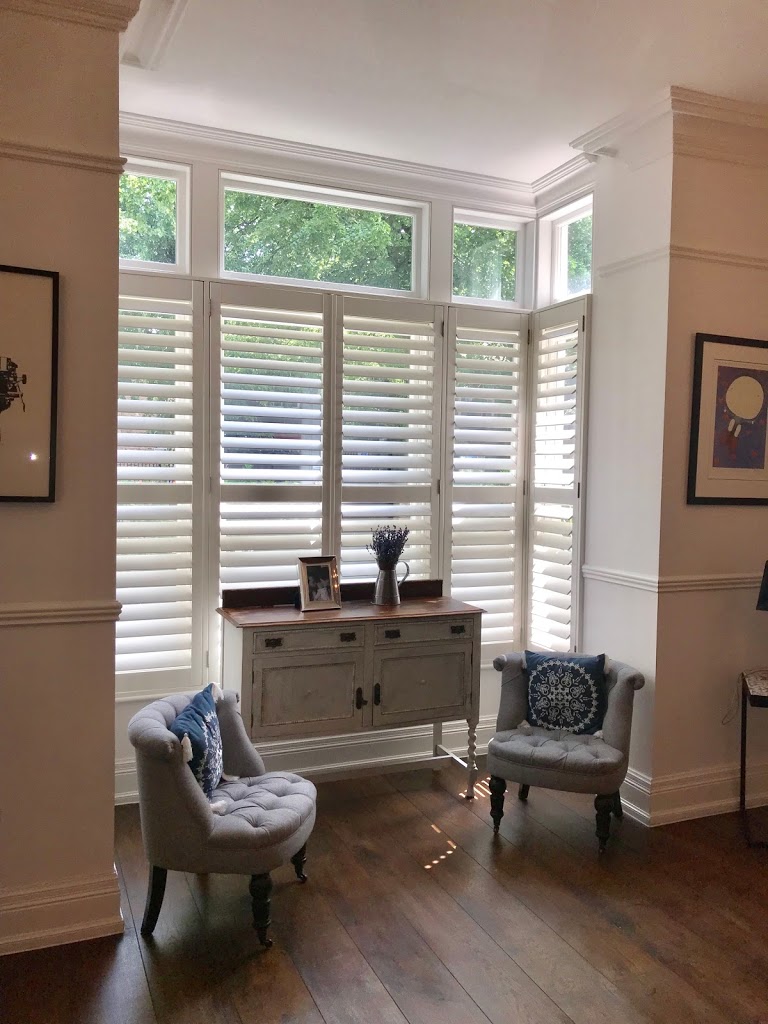
Light finishes can also help a room feel brighter because they reflect rather than absorb daylight. This can be particularly effective around bay windows or in rooms where natural light is limited.

White shutters are especially useful if you:

  • Regularly change furniture, paint colours or accessories
  • Want the shutters to remain relatively neutral
  • Have a smaller or darker room
  • Prefer a clean contemporary interior
  • Want a colour that works with both modern and period properties

However, white doesn’t necessarily mean stark brilliant white. The undertone matters.

A cool white may suit crisp grey or contemporary schemes, while a softer off-white can sit more comfortably alongside warmer neutrals, natural timber and traditional interiors.

When Do Coloured Shutters Work Better?

Coloured shutters work best when the colour feels intentional.

Rather than treating the shutters simply as a window covering, you can use them as part of the wider interior design. Deep neutrals, muted greens, greys and other carefully chosen shades can frame a window and add depth to a room.

They can be particularly effective in larger spaces where there is enough natural light to support a stronger colour.

One useful approach is to coordinate the shutters with another permanent feature in the room, such as fitted cabinetry, wall panelling or painted joinery. This tends to create a more considered result than trying to match temporary furnishings such as cushions or rugs.

The potential disadvantage is longevity. A distinctive colour you love today may be harder to accommodate if you completely change the room in five years.

Because quality made-to-measure plantation shutters are intended to remain in place for many years, it is worth thinking beyond current interior trends.

Should Shutters Match Your Walls or Window Frames?

There is no rule that shutters must exactly match either, but the relationship between the colours matters.

Matching or closely coordinating shutters with the window frame creates a seamless appearance. The eye sees the window and shutters as one feature, which is particularly effective for minimalist interiors.

Matching shutters more closely to the walls can also work. This reduces contrast and can make the shutters feel integrated into the room rather than visually framing the window.

Modern kitchen with blue cabinets and large black-framed windows with shutters; sink and countertop visible.

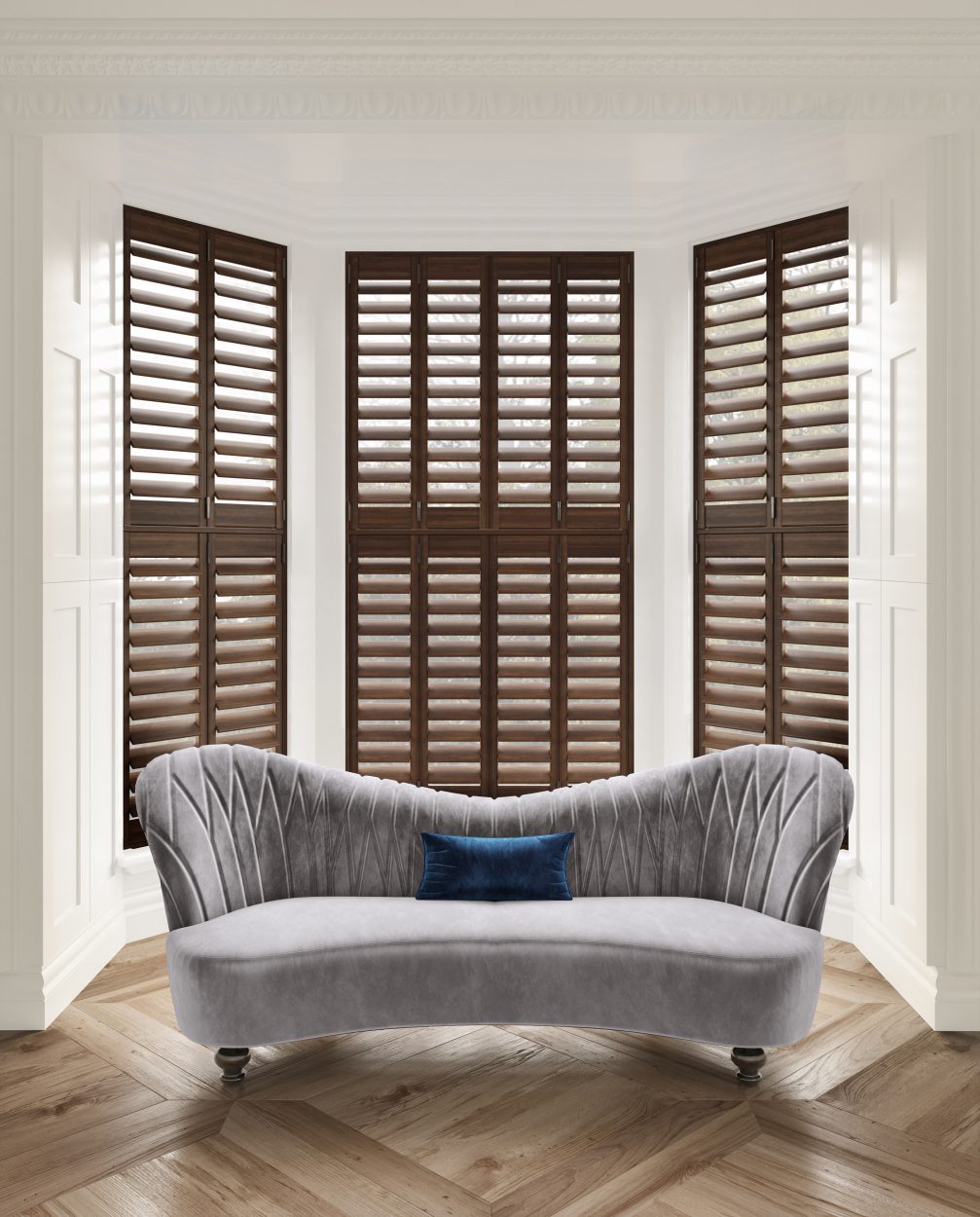
Contrast creates a different effect. Dark shutters against pale walls draw attention towards the window and emphasise its proportions. This can look striking on a large window or architectural bay but may feel heavier in a small room.

Samples are particularly valuable here. Colours can look very different beside your actual walls and flooring than they do on a screen.

At Totally Shutters, we help homeowners consider the shutter finish alongside the room itself during the made-to-measure process, rather than treating colour as an isolated decision.

Which Shutter Colours Work Best with Different Interior Styles?

For a modern minimalist interior, white, off-white and understated neutral shutters are usually the safest choices. They preserve clean lines and allow furniture, artwork and materials to provide the visual interest.
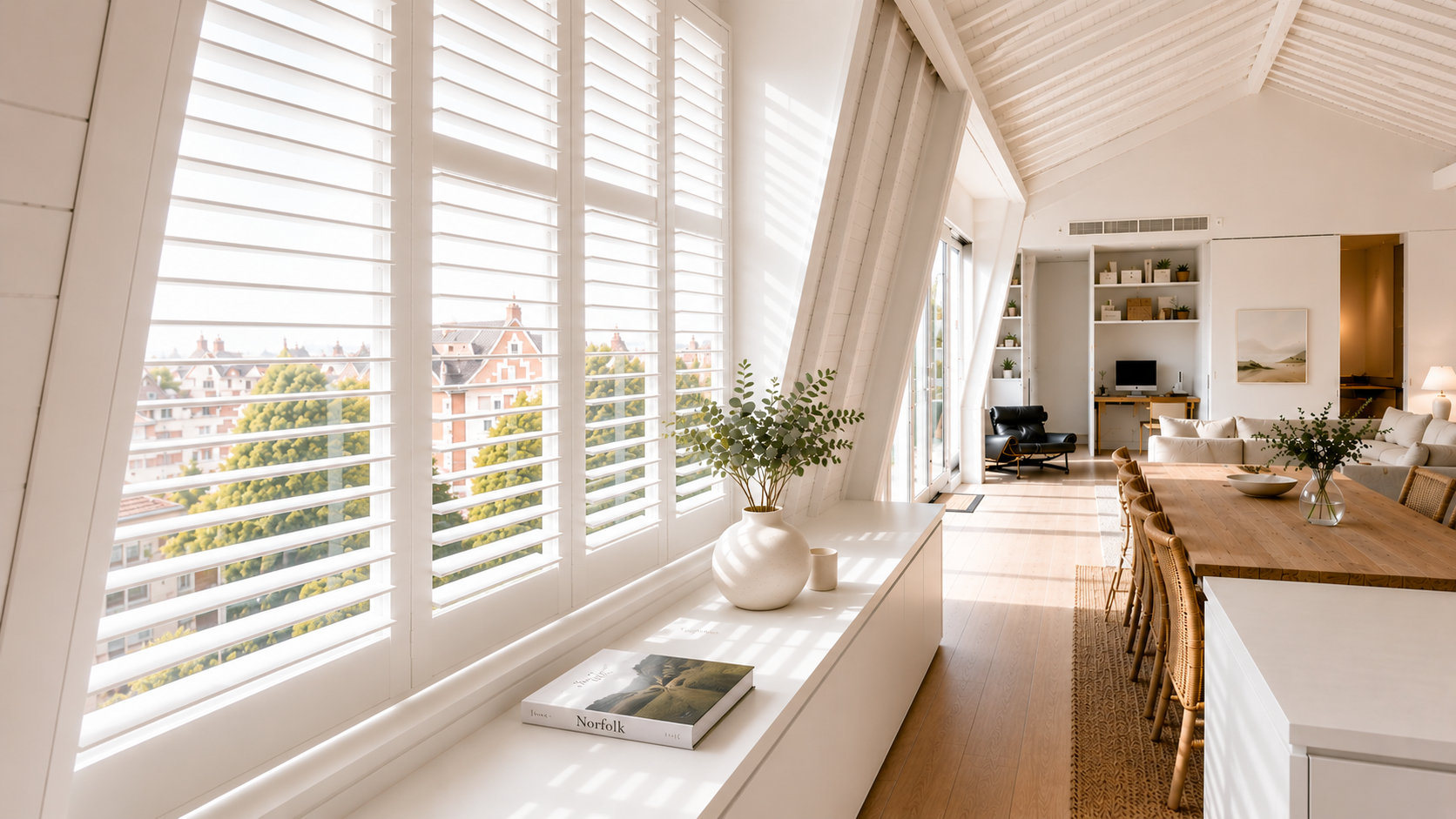
In warmer contemporary interiors, softer whites and natural-looking neutral shades can sit particularly well alongside oak, stone, textured fabrics and earthy wall colours.

Period properties allow more flexibility. Victorian and Edwardian rooms can look excellent with traditional white shutters, particularly around sash or bay window shutters, but carefully chosen heritage-inspired colours can also complement deeper wall shades and original architectural features.

For kitchens and open-plan living spaces, consider the cabinetry. Shutters that complement rather than exactly replicate kitchen units can create a cohesive finish without making the room feel overly coordinated.

The same principle applies to bedrooms: if you expect to redecorate regularly, a neutral shutter usually gives you more freedom than a strong statement colour.

Do White Shutters Let More Light into a Room?

The colour of the shutter doesn’t determine how much daylight enters through the window; louvre position, panel configuration and shutter design have a much greater effect.

However, light-coloured shutters reflect more of the available light back into the room, whereas darker surfaces absorb more light. This means white shutters can contribute to a brighter overall appearance.

If maximising natural light is important, colour should therefore be considered alongside the design.

Larger louvres can provide a more open view when tilted, while café-style shutters leave the upper portion of the window uncovered. Tier-on-tier shutters allow the upper and lower sections to operate independently.

For a street-facing living room, for example, you might keep the lower louvres angled for privacy while allowing more daylight through the upper section.

This ability to balance privacy and daylight is one of the main reasons homeowners choose fitted shutters rather than conventional curtains.

Will Coloured Shutters Make a Room Look Smaller?

Not necessarily.

A dark shutter creates more visual contrast than a white one, so it can make the window feel more prominent. In a small or naturally dark room, that may create a heavier appearance.

In a larger, well-lit space, the same dark shutters can instead add definition and architectural interest.

Window size also matters. A large bay can comfortably carry a stronger colour in a way that a small window sometimes cannot.

If you’re unsure, consider three things: how much daylight the room receives, how large the shutter installation will be, and whether you want the window to blend in or become a focal point.

Are White or Coloured Wooden Shutters More Practical?

For most households, there is little difference in everyday operation. Both require straightforward dusting and occasional gentle wiping according to the product’s care guidance.

The more important consideration is the underlying shutter material and quality of finish.

Totally Shutters uses Paulownia wood for its made-to-measure wooden shutters. Its lightweight construction makes it well suited to interior shutter panels, while a quality painted finish creates the smooth appearance expected from a premium fitted product.

For bathrooms or other areas with significant moisture, material suitability should be considered separately from colour. A shutter can look perfect for the room while being made from the wrong material for persistent humidity.

White or Coloured Shutters: Which Should You Choose?

If you want a timeless option that works with changing interiors, white, off-white or another light neutral is usually the strongest choice.

Choose coloured shutters when you have a clear interior scheme and deliberately want the windows to have more visual presence.

For a long-term decision, consider:

  • Natural light: lighter finishes can help reflect available daylight.
  • Room size: stronger colours tend to have more visual impact.
  • Existing joinery: consider window frames, doors, skirting and cabinetry.
  • Future decorating: neutral shutters provide greater flexibility if walls and furniture change.
  • Window proportions: large bays and statement windows can often carry stronger colours particularly well.


The objective isn’t simply to choose the most fashionable colour. Well-designed made-to-measure shutters should still look appropriate long after today’s interior trends have moved on.

Find the Right Shutter Finish for Your Home

If you’re deciding between white and coloured shutters, seeing finishes alongside your own interior can make the choice much easier.

Totally Shutters provides made-to-measure interior plantation shutters for homeowners across London, Kent and surrounding areas. Request a free home survey or speak to the team about the right colour, louvre and panel configuration for your windows.

Our experienced team is here to help.

Get Started Today
Call us on 020 3960 6963
Email sales@totallyshutters.co.uk
Visit www.totallyshutters.co.uk

Or request a free home survey and receive expert advice tailored to your property.

FAQs:

White and off-white finishes are enduring choices because they work with a wide range of interiors and window styles. The best shade of white depends on the undertones already present in your walls, flooring and joinery.

They don’t have to, but closely coordinating the two can create a clean, integrated appearance. A contrasting shutter colour is better suited to homeowners who deliberately want to emphasise the window.

Yes. Coloured shutters can look particularly effective across a large bay, where the window is already an important architectural feature. Consider the amount of natural light and the size of the installation before choosing a particularly dark finish.

Wooden vs MDF Shutters: Which Is Best for UK Homes?

Choosing shutters for your home often begins with colour and style, but the material behind the finish matters just as much.
Two of the most commonly discussed options are wooden window shutters and MDF shutters. At first glance, they can look similar, particularly when both are painted white. However, their weight, construction, long-term performance and suitability for different windows can vary considerably.

For homeowners comparing plantation shutters for a living room, bedroom, bay window or period property, the key question is simple:

Should you choose real wood or MDF?

Quick Answer: are wooden or MDF shutters better?

Wooden shutters are generally the stronger choice for homeowners who want a lighter, more refined and versatile made-to-measure product. MDF can provide a lower-cost solution for some standard windows, but it is heavier and may offer fewer design options.

Totally Shutters uses Paulownia wood for its plantation shutters rather than MDF. Paulownia is selected for its light weight, stability and smooth painted finish, making it well suited to custom shutter panels, larger openings and high-quality interior installations.

The best choice ultimately depends on your window size, budget, preferred finish and how long you expect the shutters to remain in your home.

What are wooden plantation shutters?

Wooden plantation shutters are internal window coverings made from natural timber. They consist of frames, hinged panels and adjustable horizontal slats known as louvres.

The louvres can be tilted to control natural light and privacy, while the panels can usually be opened when an unobstructed window is required.

Wooden shutters may be configured as:

  • Full-height shutters covering the entire window
  • Tier-on-tier shutters with independently opening upper and lower panels
  • Café-style shutters covering only the bottom section
  • Solid-panel shutters
  • Tracked or folding shutters for wide openings
  • Bespoke shutters for bay, curved or unusually shaped windows

At Totally Shutters, the principal timber used is Paulownia wood.

What are wooden plantation shutters?

Paulownia is a lightweight timber used for furniture, joinery and interior shutter manufacturing. Its relatively low weight makes it particularly useful where multiple shutter panels need to open and close smoothly without placing unnecessary strain on hinges or frames.

For plantation shutters, Paulownia offers several practical benefits:

  • It is lighter than many traditional hardwoods.
  • It can be manufactured into stable shutter components.
  • It accepts painted finishes well.
  • It is suitable for made-to-measure panel designs.
  • Its low weight can be advantageous on wide windows and bay configurations.

A professional survey remains important because the correct panel count, frame style and hinge arrangement must still be selected for the window.

What are MDF shutters?

MDF stands for medium-density fibreboard. It is an engineered material produced by combining wood fibres with resin and compressing them into dense boards.

In shutter manufacturing, MDF components are usually coated or painted to create a smooth surface. From a distance, a well-finished MDF shutter can resemble a painted wooden shutter.

MDF is commonly used because it can offer:

  • A smooth, consistent painted finish
  • Competitive pricing
  • Good performance on straightforward window shapes
  • A practical option for customers prioritising initial cost

However, MDF is significantly heavier than lightweight timber and is not always the most suitable material for large panels, unusual shapes or more complex made-to-measure designs.

Wooden vs MDF shutters: the main differences

Are wooden shutters more durable than MDF shutters?

Quality wooden shutters can provide excellent long-term performance when they are correctly manufactured, professionally fitted and used in an appropriate room.

Natural timber is often preferred for premium shutter installations because it combines strength with lower weight. Lighter panels can place less strain on hinges and frames during regular use.

MDF can also perform reliably on suitable standard windows. However, its greater weight means that careful panel design is important. Very wide MDF panels may be impractical, and manufacturers may divide a large opening into more sections to manage the load.

Durability is influenced by more than the core material. Homeowners should also consider:

  • The quality of the hinges and fixings
  • The construction of the shutter frame
  • Panel width and height
  • The standard of installation
  • Exposure to moisture
  • How frequently the panels are opened
  • Cleaning and general care

Which material gives the better finish?

Both materials can provide a neat painted appearance, but real wood usually offers a more refined result for homeowners seeking a premium interior feature.

Paulownia shutters can be finished in popular shades such as white, off-white and soft neutral colours. The timber construction also allows the shutters to retain the feel of a fitted joinery product rather than a mass-produced window covering.

MDF has a very uniform surface, which can suit simple painted shutters. However, customers looking for custom colours, larger panels or more detailed bespoke designs may find that real wood offers greater flexibility.

During a professional home survey, Totally Shutters can help homeowners compare colours, louvre sizes, panel layouts and frame options in the context of the room.

Are wooden shutters better for large windows and bay windows?

Wooden shutters are often the more practical choice for large windows, bay windows and complex openings because lightweight timber allows greater flexibility in panel design.

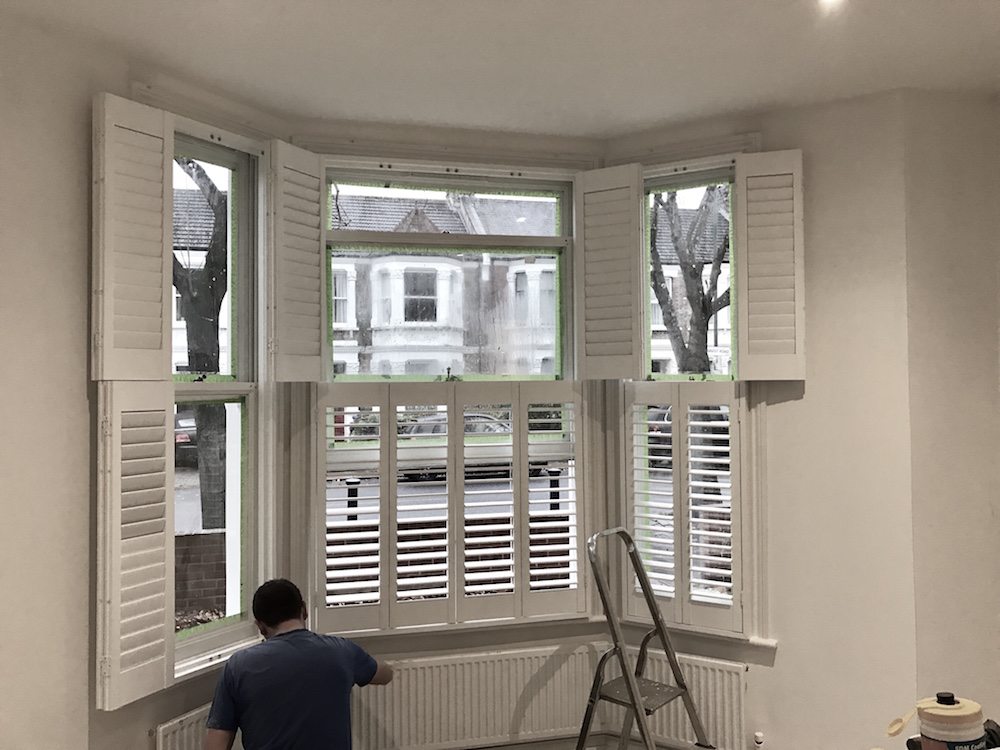
Bay windows require more than simply measuring the width and height of the glass. A shutter specialist will normally assess:

  • The number and angle of each bay section
  • Window handles and projecting fittings
  • Sill depth
  • Frame position
  • Panel opening space
  • The location of mullions
  • Suitable panel widths
  • Whether panels should fold or open individually

Because Paulownia is lightweight, it can be well suited to multi-panel bay installations where smooth operation matters.

box-bay-window-shutters

MDF may still be used by other suppliers on certain bays, but its weight can result in additional panel divisions. This can affect the sightlines and the amount of frame visible across the window.

Homeowners comparing wooden shutters for bay windows should therefore look beyond the headline price and consider how the finished panel layout will appear.

Which shutters are best for Victorian and Edwardian homes?

Wooden plantation shutters are particularly well suited to many Victorian and Edwardian properties.

These homes often feature:

  • Tall sash windows
  • Angled or square bay windows
  • Generous ceiling heights
  • Decorative architraves
  • Street-facing reception rooms

A lightweight wooden shutter can complement these proportions without introducing the visual bulk of heavy curtains.

For a street-facing bay, café-style shutters may provide privacy across the lower section while leaving the upper glass open. Full-height or tier-on-tier shutters provide more complete coverage and greater flexibility at night.

The correct choice depends on overlooking, room use and the original window proportions.

Are MDF shutters suitable for every room?

No.

MDF shutters are best treated as a material for appropriate, relatively dry interior spaces and straightforward installations.

They may be considered for:

  • Standard bedroom windows
  • Living-room windows
  • Smaller rectangular openings
  • Projects where initial budget is the main concern

They are generally less suitable for:

  • Bathrooms with high humidity
  • Wet rooms
  • Complex special shapes
  • Very wide panels
  • Installations requiring particularly lightweight operation.

It is important not to assume that either MDF or natural wood is automatically suitable for a high-moisture room.

What shutters should you use in bathrooms?

Bathrooms require a material specifically designed to cope with humidity, condensation and occasional splashes.

Even though Totally Shutters uses Paulownia wood for most interior rooms, a moisture-resistant shutter material is normally more appropriate for bathrooms and other high-humidity spaces.

The exact recommendation should take account of:

  • Distance from the bath or shower
  • Ventilation
  • Frequency of condensation
  • Whether the window is regularly opened
  • The level of direct water exposure.

Homeowners should discuss bathroom conditions during the survey rather than choosing solely by appearance.

Which Looks Better?Do wooden shutters offer better light control than MDF?

The material itself does not determine light control. Light management depends more heavily on the shutter configuration, louvre size, frame design and quality of fit.

Both wooden and MDF shutters can use adjustable louvres. However, made-to-measure wooden shutters may offer greater design flexibility across unusual windows and larger openings.

Useful choices include:

Wider louvres

Wider louvres can create a more open view and allow generous daylight when tilted.

Narrower louvres

Narrower louvres create a more traditional appearance and may suit smaller sash windows.

Full-height shutters

These cover the complete opening and provide consistent control across the window.

Tier-on-tier shutters

These divide the shutter into upper and lower sections that can operate independently.

Café-style shutters

These cover the lower part of the window, maintaining street-level privacy while leaving the upper glass clear.

cafe-style-shutter

The best arrangement should align the shutter rails and panel divisions with the existing window wherever possible.

Do wooden shutters provide better insulation?

Well-fitted internal shutters can create an additional layer between the room and the glass. However, homeowners should be cautious about broad claims regarding guaranteed energy savings.

Insulating performance depends on:

  • The existing window
  • Gaps around the frame
  • Shutter fit
  • Panel configuration
  • Whether the shutters are closed
  • The age and condition of the property

Wood is naturally less conductive than some materials, but the overall installation matters more than the material alone.
Shutters should therefore be viewed as a useful supplementary window covering rather than a replacement for appropriate glazing, draught proofing or other energy-efficiency improvements.

Are wooden shutters easier to maintain?

Both wooden and MDF shutters are relatively easy to maintain compared with fabric curtains.

Routine care normally involves:

  1. Dusting the louvres with a soft cloth or suitable duster.
  2. Wiping marks with a lightly damp cloth.
  3. Drying the surface promptly.
  4. Avoiding abrasive cleaners.
  5. Checking that hinges and panels remain aligned.

Natural wood should not be saturated with water. MDF shutters also require care because damage to their outer coating can expose the engineered core.

Where maintenance is concerned, prevention is more important than intensive cleaning.

Wooden shutters vs MDF shutters: which offers better value?

MDF may cost less initially, but Paulownia wooden shutters can offer stronger long-term value for customers prioritising lighter operation, bespoke design and a premium finish.

1.14

Value should not be judged by price alone. Consider:

  • How long you intend to remain in the property
  • Whether the window is a standard shape
  • The size and number of panels
  • The importance of finish quality
  • How often the shutters will be operated
  • Whether you want custom colours
  • Whether the installation is intended to be a lasting interior feature

For a short-term renovation or a small standard window, MDF may appear attractive on price.

For a prominent bay, large opening or carefully designed interior, made-to-measure wooden shutters may represent the more suitable investment.

How much do wooden and MDF shutters cost?

The final cost of shutters is normally influenced by the complete specification rather than the material alone.

A quotation may take account of:

  • Overall window dimensions
  • Number of openings
  • Material
  • Shutter style
  • Panel count
  • Louvre size
  • Frame design
  • Custom colour
  • Special shapes
  • Bay angles
  • Access
  • Installation requirements
Bay windows, curved bays, French doors and unusually shaped openings often require more detailed measurement and fitting than a simple rectangular window.
Modern bay window shutters in neutral-toned living space

Supply-only shutters may appear cheaper than a fully surveyed and installed service, but the comparison is not always like for like. 

Professional measurement can reduce the risk of poor alignment, restricted opening or unsuitable panel proportions.

Totally Shutters provides made-to-measure advice based on the actual window rather than relying on a broad online estimate. Homeowners can request a free home survey for an accurate quotation.

Are wooden shutters better than blinds or curtains?

Wooden shutters, blinds and curtains each create a different result.

Wooden shutters are particularly attractive where the homeowner wants the window treatment to feel like part of the architecture.

Blinds may suit smaller budgets or spaces where a discreet covering is preferred. Curtains remain useful where softness, pattern or layered insulation is important.

Some homeowners combine shutters with curtains, using shutters for privacy and light control and curtains for decorative framing.

Should you choose wooden or MDF shutters?

Choose Paulownia wooden shutters if you want:

  • A lightweight shutter system
  • A premium fitted appearance
  • Made-to-measure flexibility
  • Shutters for a bay or larger window
  • Custom design options
  • A long-term interior feature

Consider MDF shutters from an alternative supplier if:

  • Your window is small and straightforward
  • Initial price is the dominant concern
  • You are comfortable with a heavier engineered material
  • You do not require complex shapes or particularly wide panels

For most customers approaching Totally Shutters, the recommendation is clear: Paulownia wooden shutters provide the combination of weight, finish and bespoke flexibility that suits the company’s made-to-measure approach.

Why professional surveying and installation matter

shutter-terminology

Even the best material can perform poorly if the shutters are incorrectly measured or fitted.

During a professional survey, a shutter specialist will normally assess:

  • Window dimensions at several points
  • Out-of-square openings
  • Handles, locks and vents
  • Sill depth
  • Suitable frame position
  • Panel count and folding direction
  • Louvre clearance
  • Bay angles
  • Access for fitting

These details influence how the shutters look and operate.

Professional installation is also important for accurate alignment. Panels should open smoothly, sit consistently within the frame and close without unnecessary gaps or strain.

Wooden window shutters for UK homes:
the final verdict

For UK homeowners comparing materials, wooden window shutters are generally the better choice where quality, low weight, bespoke design and long-term appearance matter most.

MDF can suit some standard windows and lower initial budgets, but its heavier construction and more limited versatility may be less appropriate for large bays, unusual shapes and premium interior projects.

Totally Shutters uses Paulownia wood because it supports a lightweight, made-to-measure shutter system with a smooth, refined finish. The right design will still depend on your window dimensions, room conditions and preferred shutter style, so an accurate home survey remains an essential part of the process.

Considering wooden plantation shutters for your home?

Totally Shutters can help you compare shutter styles, louvre sizes, panel configurations and suitable materials before preparing a made-to-measure quotation.

Our experienced team is here to help.

Get Started Today
Call us on 020 3960 6963
Email sales@totallyshutters.co.uk
Visit www.totallyshutters.co.uk

Or request a free home survey and receive expert advice tailored to your property.

FAQs:

Wooden shutters are usually better for homeowners seeking lighter panels, bespoke configurations and a premium finish. MDF may offer a lower initial price for certain standard windows, but it is heavier and may be less flexible for large or unusually shaped openings.

Totally Shutters uses Paulownia wood for its interior plantation shutters. Paulownia is selected for its low weight, stability and suitability for smooth painted finishes.

No. Totally Shutters focuses on Paulownia wooden shutters rather than MDF. This supports the company’s made-to-measure, premium approach.

Yes. Lightweight wooden shutters can be particularly suitable for bay windows because the panels can be designed around the individual sections and angles of the bay. A professional survey is required to plan the frame and panel layout accurately.

Natural wood is not normally the first recommendation for a bathroom with persistent humidity or direct water exposure. A specialist moisture-resistant shutter material is usually more suitable, depending on the room’s ventilation and layout.

MDF shutters are often priced lower than real wood options. However, the total quotation also depends on window size, shutter style, panel count, finish, shape and installation requirements.

A precise lifespan cannot be guaranteed because it depends on product quality, installation, use and maintenance. Well-made wooden shutters are intended to be a durable, long-term fitted window covering.

Made-to-measure shutters are normally better for bay windows, out-of-square openings, large windows and homes where panel alignment is important. Professional surveying and fitting also reduce the risk of incorrect measurements or restricted panel movement.

Café Style vs Full Height Shutters: Which Should You Choose? | Totally Shutters


Choosing plantation shutters isn’t just about selecting a colour or material. One of the biggest decisions you’ll make is choosing the right shutter style for your home.

Two of the most popular options are café-style shutters and full height shutters. Both offer the timeless appearance and practical benefits that plantation shutters are known for, but they suit different homes, lifestyles and priorities.

So which is the better choice?

Quick Answer:
Choose full height shutters if you want maximum privacy, insulation and versatility.

Choose café-style shutters if you want to maximise natural light while maintaining privacy at street level.

At Totally Shutters, we help homeowners throughout London, Kent, Surrey, Essex and the Home Counties choose the perfect shutter style based on their property, lifestyle and interior design goals.

What Are Full Height Shutters?

Full height shutters cover the entire window from top to bottom.

They feature adjustable louvres across the full height of the opening and are the most popular style of plantation shutter in the UK.

They’re ideal for:

  • Bedrooms
  • Living rooms
  • Large windows
  • French doors
  • Modern homes
  • Period properties

Because they cover the whole window, they provide excellent control over privacy and light throughout the day.

What Are Café-Style Shutters?

Café-style shutters cover only the lower section of the window, leaving the upper half completely open.

Originally inspired by continental cafés, this style has become increasingly popular in UK homes, particularly in:

  • Kitchens
  • Dining rooms
  • Ground-floor living rooms
  • Victorian terraces
  • Street-facing properties

They offer privacy where you need it while allowing plenty of natural daylight into the room.

cafe shutters

Café Style vs Full Height Shutters:
What’s the Main Difference?

Quick Comparison

The right choice depends less on appearance and more on how you use the room.

Which Style Offers Better Privacy?

Winner: Full Height Shutters

If privacy is your highest priority, full height shutters are difficult to beat.

They allow you to:

  • Close the entire window
  • Adjust louvres for varying privacy levels
  • Control visibility day and night

They’re particularly suitable for:

  • Bedrooms
  • Bathrooms
  • Busy roads
  • Closely overlooked properties

When Café-Style Shutters Are Enough

Café-style shutters provide privacy only on the lower half of the window.

They’re ideal if:

  • Most overlooking happens at street level
  • You still want uninterrupted daylight
  • Your room isn’t overlooked from above

This makes them especially popular in London’s Victorian terraces.

cafe-style-blinds

Which Style Lets in More Natural Light?

Winner: Café-Style Shutters

Because the upper half of the window remains uncovered, café shutters maximise daylight throughout the day.

Benefits include:

  • Brighter rooms
  • Better sky views
  • A more open feel
  • Reduced need for artificial lighting

If your room feels dark, café shutters can make a noticeable difference.

Interior of a room with three white plantation shutters on windows; fall foliage visible outside, with a tan chair in the foreground.

Which Looks Better?

Both — But in Different Ways

This comes down to personal preference.

Full Height Shutters

Create:

  • A clean, symmetrical appearance
  • Strong architectural lines
  • A premium fitted look

Ideal for modern and minimalist interiors.

Café-Style Shutters

Offer:

  • Traditional charm
  • Character
  • European-inspired styling

Perfect for older properties and cosy kitchens.

Which Costs More?

Quick Answer
Full height shutters generally cost more because they use more material and cover the entire window.

Typical UK Pricing

Most plantation shutters cost between: £300–£800+ per window

Or approximately: £350–£600+ per m² for premium hardwood shutters.

What Affects the Cost?

Several factors influence pricing:

Window Shape
  • Bay windows
  • Sash windows
  • Large openings

Require more bespoke manufacturing.

Material

At Totally Shutters, we specialise in:

  • Paulownia hardwood
  • Poplar hardwood
  • Vinyl shutters for bathrooms

Unlike many suppliers, we do not use MDF, preferring premium hardwood for its strength, finish and longevity.

Finish

Prices also vary depending on:

  • Standard white
  • Custom colours
  • Louvre size
  • Hidden tilt rods

If you’d like an accurate quotation, request a free home survey and we’ll recommend the most suitable option for your home.

Why We Choose Hardwood Over MDF

Many homeowners researching shutters compare hardwood with MDF. At Totally Shutters, we’ve made a conscious decision not to offer MDF shutters

Why?

Because we believe hardwood delivers superior long-term performance.

Paulownia Hardwood

Benefits include:

  • Lightweight
  • Durable
  • Stable
  • Smooth painted finish

Poplar Hardwood

Offers:

  • Excellent strength
  • Beautiful finish
  • Long lifespan

Vinyl for Bathrooms

For humid rooms such as bathrooms and en-suites, we recommend specialist vinyl shutters that resist moisture and won’t warp over time.

Which Rooms Suit Café-Style Shutters?

TSDoors may 800x600 (12)

Kitchens

One of the most popular choices. Why?

They:

  • Let in plenty of daylight
  • Maintain privacy from neighbours
  • Create a welcoming atmosphere
interior_bug

Victorian & Edwardian Homes

Café shutters complement:

  • Tall sash windows
  • Original architectural features
  • Period detailing

They’re especially popular throughout London.

#image_title

Dining Rooms

Ideal where:

  • Windows face the street
  • You want natural light throughout the day
  • You prefer a traditional appearance

Which Rooms Suit Full Height Shutters?

Bedrooms

Full height shutters are perfect for:

  • Better privacy
  • Improved light control
  • A calm, uncluttered look

Living Rooms

Excellent for:

  • Bay windows
  • Large glazing
  • Family rooms

They provide flexibility throughout the day while creating a premium finish.

New Builds

Many homeowners choose full height shutters because they:

  • Add character
  • Improve insulation
  • Create clean, contemporary lines

What About Bay Windows?

Bay windows work beautifully with both styles.

Full Height

Best if you want:

  • Complete privacy
  • Uniform appearance
  • Maximum insulation

Café Style

Ideal if:

  • The bay faces the street
  • You want uninterrupted daylight
  • Privacy is only needed at eye level


If you’ve searched bay window shutters cost UK, remember that bespoke bays require additional craftsmanship regardless of style.

Full Height vs Tier-on-Tier

Another common comparison.

Tier-on-Tier

Tier-on-tier shutters allow the upper and lower sections to operate independently.

They’re ideal if you want:

  • Full coverage
  • Maximum flexibility
  • Variable privacy

Many homeowners who can’t decide between café and full height eventually choose tier-on-tier because it combines the benefits of both.

Shutters vs Curtains

Compared with curtains, both café and full height shutters offer:

  • Better light control
  • Easier maintenance
  • Improved insulation
  • A cleaner appearance

Curtains can still be paired with shutters for decorative purposes if desired.

Shutters vs Blinds

Many customers also ask:

Are shutters better than blinds UK?

For many homeowners, the answer is yes.

Shutters generally provide:

  • Better durability
  • Superior insulation
  • More precise light control
  • Greater kerb appeal

Design Tips for Choosing the Right Style

Choose Full Height If You Want:

  • Complete privacy
  • Better insulation
  • Bedrooms
  • Larger windows
  • A contemporary look

Choose Café Style If You Want:

  • Maximum natural light
  • Traditional character
  • Street-level privacy
  • A brighter kitchen or dining room

White Remains the Most Popular Colour

White shutters continue to dominate because they:

  • Reflect natural light
  • Suit every interior style
  • Make rooms feel larger

Custom colours are also available if you’d like something more individual.

Why Choose Totally Shutters?

At Totally Shutters, we specialise in made-to-measure plantation shutters across London, Kent, Surrey, Essex and the Home Counties.

We offer:

  • Premium hardwood shutters
  • Paulownia and Poplar craftsmanship
  • Vinyl bathroom shutters
  • Bespoke design advice
  • Precision installation
  • Experience with period and modern homes

Whether you’re choosing café-style, full height or tier-on-tier shutters, we’ll help you find the solution that perfectly suits your home.

Design Your Perfect Shutters Today

Still deciding between café-style and full height shutters?

Our experienced team is here to help.

Get Started Today
Call us on 020 3960 6963
Email sales@totallyshutters.co.uk
Visit www.totallyshutters.co.uk

Or request a free home survey and receive expert advice tailored to your property.

FAQs:

Neither is universally better. Full height shutters offer maximum privacy and insulation, while café-style shutters maximise natural light and suit street-facing rooms.

Usually, yes. They use less material and cover only part of the window, although pricing depends on the size and specification.

Café-style shutters are one of the most popular choices because they combine privacy with excellent natural light.

Yes. They provide greater privacy and light control, making them ideal for sleeping areas.

Absolutely. They’re an excellent option for bay windows, especially in Victorian and Edwardian homes where maintaining natural light is a priority.

We recommend premium hardwood for most living spaces. At Totally Shutters, we use Paulownia hardwood, Poplar hardwood, and vinyl shutters for bathrooms and other high-moisture areas—never MDF.

Choosing between café-style and full height shutters isn’t about finding the “best” option—it’s about finding the right solution for your home.

With expert guidance and made-to-measure plantation shutters from Totally Shutters, you can enjoy the perfect balance of style, privacy and natural light for years to come.

How Shutters Transform Natural Light in Your Home

Natural light can completely change how a home feels. A bright, airy room appears larger, more welcoming and more enjoyable to spend time in. Yet many homeowners unknowingly reduce the amount of daylight entering their homes by choosing bulky curtains or poorly positioned blinds.

If you’ve ever found yourself opening curtains fully during the day just to let enough light in—only to lose all your privacy—you’ve probably wondered if there’s a better solution.

Do Plantation Shutters Improve Natural Light?

Quick Answer:
Yes. Plantation shutters are one of the best window treatments for maximising natural light while maintaining privacy.

Unlike curtains or blinds, shutters allow you to precisely control the direction, intensity and amount of daylight entering your home. By simply adjusting the louvres, you can brighten a room without exposing your home to neighbouring properties or passers-by.

At Totally Shutters, we’ve installed premium made-to-measure plantation shutters throughout London, Kent, Surrey, Essex and the Home Counties, helping homeowners transform dark, overlooked rooms into bright, practical living spaces.

Why Natural Light Matters?

Natural light isn’t just about aesthetics.

A well-lit room can feel:

  • Larger
  • More open
  • More inviting
  • More comfortable throughout the day

It also reduces the need for artificial lighting and can completely alter the atmosphere of a room.

Whether you’re renovating a Victorian home or finishing a new build, improving natural light is often one of the most effective design upgrades you can make.

How Do Plantation Shutters Control Natural Light?

Unlike curtains, which are generally open or closed, plantation shutters allow you to make small adjustments throughout the day.

You can:

  • Tilt the louvres upwards
  • Tilt them downwards
  • Open individual panels fully
  • Close only certain sections of the window

This flexibility allows you to adapt your room to changing sunlight without compromising privacy.

Why Shutters Let in More Light Than Curtains

Many homeowners assume curtains allow maximum light because they can be fully opened.

In reality, curtains often:

  • Cover part of the window even when open
  • Hang into the glass area
  • Create bulky stacks either side of the window
  • Reduce the visible size of the opening

Plantation shutters sit neatly inside the window recess, allowing the full shape of the window to become part of the room’s design.

The result is often a brighter, cleaner-looking space.

Shutters vs Curtains

For homeowners wanting bright rooms without feeling overlooked, shutters are often the clear winner.

Are Shutters Better Than Blinds for Light Control?

Quick Answer

In most situations, yes.

Blinds can certainly control light, but shutters offer greater flexibility.

With shutters, you can:

  • Redirect sunlight
  • Reduce glare
  • Maintain privacy
  • Keep rooms bright

This makes them especially useful in living rooms, kitchens and home offices.

It’s one reason searches for “are shutters better than blinds UK” continue to grow.

Which Shutter Style Lets in the Most Light?

Full Height Shutters

Full height shutters remain the most popular option.

Benefits include:

  • Clean, uninterrupted appearance
  • Excellent daylight control
  • Ideal for larger windows
  • Suitable for most rooms


Tier-on-Tier Shutters

Tier-on-tier shutters offer maximum flexibility.

You can:

  • Open the upper panels
  • Keep the lower section closed
  • Enjoy complete privacy while flooding the room with daylight

They’re particularly popular in London terraces and street-facing homes.

Café-Style Shutters

Café-style shutters cover only the lower half of the window.

This allows:

  • Maximum daylight
  • Excellent privacy
  • A bright, open feel

Perfect for:

  • Kitchens
  • Dining rooms
  • Ground-floor properties


cafe shutters

Bay Window Shutters

Bay windows naturally bring in large amounts of daylight.

Made-to-measure shutters enhance this by:

  • Following the exact shape of the bay
  • Reducing bulky curtain stacks
  • Allowing sunlight from multiple angles

If you’ve been researching bay window shutters cost UK, you’ll know they’re one of the most effective upgrades for period homes.

Design Tips: Maximising Natural Light with Shutters

white-window-shutters

Choose White or Soft Neutral Colours

White remains the UK’s most popular shutter colour—and for good reason.

It:

  • Reflects more daylight
  • Makes rooms feel larger
  • Works with almost any décor

Soft greys and warm neutrals can achieve a similar effect while complementing heritage interiors.

Consider Larger Louvre Sizes

Larger louvres:

  • Let in more light
  • Offer wider views
  • Create a contemporary appearance

They’re particularly effective in open-plan homes.

Adjust Louvres Throughout the Day

One of the biggest benefits of shutters is flexibility.

Rather than leaving curtains open all day, you can:

  • Angle louvres upwards in the morning
  • Reduce glare in the afternoon
  • Maintain privacy in the evening

Your window treatment works with the changing daylight rather than against it.

Real-Life Use Cases

Victorian & Edwardian Homes

Older homes often feature:

  • Tall sash windows
  • Bay windows
  • Decorative mouldings

Shutters complement these original features while improving light control.

They’re especially popular across London and Surrey.

Modern New Builds

New homes often have large glazing areas.

Shutters help by:

  • Softening harsh sunlight
  • Reducing glare
  • Creating a cleaner finish than curtains

Street-Facing Properties

One of the biggest frustrations for homeowners is choosing between:

  • Privacy
  • Natural light

With shutters, you don’t have to.

Tier-on-tier and café-style shutters allow you to enjoy both simultaneously.

Bedrooms

Bedrooms benefit from shutters because they offer:

  • Adjustable morning light
  • Evening privacy
  • Better sleep environment
  • Clean, uncluttered styling

How Much Do Plantation Shutters Cost in the UK?

Quick Answer

Most plantation shutters cost between £300 and £800+ per window, depending on the size, material and design.

What Influences the Cost?

The best way to obtain accurate pricing is to request a free home survey from our experienced team.

Material

At Totally Shutters, we specialise in premium materials:

  • Paulownia hardwood
  • Poplar hardwood
  • Vinyl shutters for bathrooms and high-moisture environments
Window Type

Pricing varies depending on:

  • Bay windows
  • Sash windows
  • Large openings
  • Unusual shapes
Finish & Customisation

Costs also depend on:

  • Standard white finishes
  • Bespoke colours
  • Louvre size
  • Hidden tilt mechanisms
  • Tier-on-tier configurations

Unlike some suppliers, we do not use MDF, preferring hardwood for its durability, stability and premium finish.

Why Totally Shutters Chooses Hardwood
Over MDF

When comparing shutters, you’ll often come across MDF options.
At Totally Shutters, we’ve made a conscious decision to focus on premium materials.

shutter-company

Paulownia Hardwood

Paulownia offers:

  • Lightweight strength
  • Excellent stability
  • Smooth painted finish
  • Long-term durability

Poplar Hardwood

Poplar is ideal for:

  • Traditional homes
  • Everyday family living
  • Strong, beautifully finished shutters

Vinyl for Bathrooms

For bathrooms, en-suites and other humid spaces, we recommend specialist vinyl shutters that resist moisture and won’t warp over time.

Why We Don't Use MDF

While MDF is common at the lower end of the market, we believe hardwood offers:

Better longevity
A superior finish
Greater stability
Better overall value over the life of the product

Shutters vs Curtains

Many homeowners now choose shutters alone—or pair them with decorative curtains to combine practicality with softness.

Matching Shutters to Your Interior Style

One of the strengths of plantation shutters is their versatility.

One of the strengths of plantation shutters is their versatility.

They suit:

  • Contemporary homes
  • Cottage properties
  • Victorian terraces
  • Edwardian homes
  • Scandinavian interiors
  • Traditional family homes

Whether you’re aiming for a minimalist look or a classic finish, shutters complement almost any style.

Why Choose Totally Shutters?

We design and install premium made-to-measure shutters across:

  • London
  • Kent
  • Surrey
  • Essex
  • The Home Counties

Homeowners choose us because we offer:

  • Hardwood craftsmanship
  • Bespoke designs
  • Precision installation
  • Honest advice
  • Experience with both modern and period properties

Whether you’re looking to brighten a single room or transform your entire home, we’re here to help you make the right choice.

Ready to Brighten Your Home?

If you’d like to enjoy more natural light without compromising privacy, we’d love to help.

Get Started Today
Call us on 020 3960 6963
Email sales@totallyshutters.co.uk
Visit www.totallyshutters.co.uk

Or request a free home survey and receive expert advice tailored to your property.

FAQs:

Yes. Because the louvres can be adjusted, shutters allow you to control daylight far more precisely while maintaining privacy.

Café-style and tier-on-tier shutters provide the greatest flexibility, while full height shutters remain the most popular all-round option.

For most homes, yes. Shutters allow you to redirect light, reduce glare and maintain privacy more effectively than many blind systems.

Yes. White and other light neutral colours reflect natural light and help rooms feel larger and brighter.

They often do. By reducing visual clutter and maximising daylight, shutters can create a greater sense of space.

Many homeowners believe so. Hardwood shutters offer excellent durability, timeless style and long-term performance, making them a worthwhile investment for many UK homes.

Natural light has the power to transform a home—but only if your window coverings allow it to.

With made-to-measure plantation shutters from Totally Shutters, you don’t have to choose between a bright home and a private one. You can enjoy both, every day.

Do Shutters Make a Room Look Bigger? UK Design Guide

Discover how plantation shutters can make a room feel bigger, brighter and more open. Expert UK advice on design, cost, and choosing the right shutters.

Do Shutters Make a Room Look Bigger?
Interior Design Explained.

If your room feels dark, cramped, or smaller than it should, your window coverings could be part of the problem.

Heavy curtains, bulky poles, and poorly fitted blinds can block light, cut off window space, and visually shrink a room.

So it’s no surprise that many UK homeowners are now asking:


Do shutters make a room look bigger?
Quick Answer:
Yes — plantation shutters can make a room feel bigger, brighter, and more open.


They achieve this by:

  • Letting in more natural light
  • Creating clean, uncluttered lines
  • Maximising visible window space
  • Enhancing the sense of height and structure

At Totally Shutters, we regularly see this transformation in homes across London, Kent, Surrey, Essex and the Home Counties — especially in smaller rooms, bay windows, and period properties.

Why Do Shutters Make Rooms Feel Bigger?

1. They Maximise Natural Light

Natural light is one of the biggest factors in how spacious a room feels.

Unlike curtains, shutters allow you to:

  • Tilt louvres to direct light
  • Let light in while maintaining privacy
  • Avoid fully blocking windows

More light = more perceived space.

2. They Remove Visual Clutter

Curtains can add:

  • Fabric bulk
  • Heavy folds
  • Visual interruption

Shutters sit neatly within the window frame, creating:

  • Clean lines
  • A tidy, structured look
  • Less visual noise

This instantly makes rooms feel more open.

3. They Enhance Window Proportions

Shutters highlight the full shape of your windows rather than hiding them.

This is especially effective for:

  • Bay windows
  • Sash windows
  • Tall Victorian windows

The result is a stronger sense of height and space.

Modern kitchen with blue cabinets and large black-framed windows with shutters; sink and countertop visible.

4. They Create a Built-In, Architectural Feel

Shutters don’t look like an add-on.

They look like part of the room itself.

That subtle shift makes interiors feel:

  • More considered
  • More spacious
  • More premium

Shutters vs Curtains:
Which Makes a Room Look Bigger?

Quick Answer: Shutters almost always make a room feel larger than curtains.

Why?

Curtains can sometimes make a room feel cosy — but also smaller. 
Shutters tend to do the opposite.

Shutters vs Blinds: What About Space?

Blinds are less bulky than curtains, but still:

  • Sit above the window
  • Interrupt clean lines
  • Offer less design impact

Shutters create a more seamless finish.

That’s why many searches like are shutters better than blinds UK increasingly point toward shutters for both function and design.

Which Shutter Styles Make Rooms Look Bigger?

Full Height Shutters

Best overall choice for maximising space.

  • Clean, uninterrupted lines
  • Makes windows appear taller
  • Ideal for bedrooms and living rooms

Tier-on-Tier Shutters

Great for balancing:

  • Privacy (bottom closed)
  • Light (top open)

Perfect for street-facing homes in London.

Café-Style Shutters

Excellent for:

  • Smaller rooms
  • Kitchens
  • Ground-floor spaces

They keep the upper window open, allowing more daylight in.

Bay Window Shutters

Bay windows benefit hugely from shutters.

They:

  • Follow the exact shape
  • Eliminate curtain bulk
  • Enhance natural light flow

If you’re researching bay window shutters cost UK, this is one of the biggest visual upgrades you can make.

How Much Do Plantation Shutters Cost in the UK?

Quick Answer

Plantation shutters typically cost between £300 and £800+ per window, depending on size, material, and design.

Typical UK Price Guide

Hardwood shutters: £350–£600+ per m²
Bay window shutters cost UK projects: higher due to bespoke design

What Affects the Cost?

Material

At Totally Shutters, we specialise in:

  • Paulownia hardwood shutters
  • Poplar hardwood shutters
  • Vinyl shutters for bathrooms

We do not use MDF — focusing on premium materials for long-term performance.

Window Type

Costs increase for:

  • Bay windows
  • Sash windows
  • Large or unusual shapes

Design & Finish

  • Tier-on-tier vs full height
  • Custom colours vs white
  • Louvre size and detailing

For accurate pricing, it’s best to request a free home survey and get tailored advice.

Why Material Choice Matters for Space and Design

Material affects not just durability — but appearance.

Hardwood Shutters (Our Speciality)

We use:

  • Paulownia hardwood (lightweight, smooth, stable)
  • Poplar hardwood (strong, ideal for traditional homes)

These materials allow:

  • Slimmer frames
  • Cleaner finishes
  • Better long-term stability

All of which contribute to a more refined, spacious feel.

Vinyl (For Bathrooms)

Used in high-moisture areas:

  • Bathrooms
  • En-suites

They maintain the same clean look without risk of warping.

Poplar Hardwood

  • Durable and reliable
  • Perfect for traditional homes
  • Excellent finish quality

Why We Don’t Use MDF

We avoid MDF because:

  • It’s heavier
  • Less refined in finish
  • Not as long-lasting

For homeowners looking to enhance both space and quality, hardwood is the better choice.

Bedroom with white window shutters, gray curtains, and a neatly made white bed against light walls.

Where Shutters Make the Biggest Difference?

Small Rooms

Shutters help by:

  • Maximising light
  • Reducing clutter
  • Making walls feel less crowded
house-shutters

Period Homes
(Victorian & Edwardian)

Perfect for:

  • Tall sash windows
  • Bay windows
  • Maintaining architectural character

Very popular across London and the Home Counties.

New Builds

Shutters can:

  • Add character
  • Make rooms feel less “boxy”
  • Improve light flow

Street-Facing Rooms

They allow:

  • Privacy without darkness
  • Daytime light with discretion

Ideal for urban living.

Design Tips to Make Your Room Feel Bigger with Shutters

Choose White or Light Colours

Reflects light and opens up the space.

Use Larger Louvre Sizes

Lets in more light and creates a more open feel.

Keep Lines Clean

Full height shutters work best for simplicity.

Let Light In Strategically

Tilt louvres upwards to brighten the room without sacrificing privacy.

window-shutters-brentwood

Are Shutters Worth It for Smaller Rooms?

Short Answer

Yes — they’re one of the most effective ways to make a room feel bigger without structural changes.

Compared to curtains or blinds, they:

  • Improve light
  • Reduce clutter
  • Enhance proportions

That’s why so many homeowners upgrading in Kent, Surrey and Essex are choosing shutters.

Why Homeowners Choose Totally Shutters?

We specialise in made-to-measure plantation shutters in London and across the Home Counties, offering:

  • Hardwood craftsmanship (no MDF)
  • Bespoke design advice
  • Precision installation
  • Experience in both period and modern homes

If you’re looking to improve how your space feels — not just how it looks — shutters can make a real difference.

Design Your Perfect Shutters Today

Thinking about making your room feel bigger and brighter?

Call us on 020 3960 6963
Email sales@totallyshutters.co.uk
Visit www.totallyshutters.co.uk

Or request a free home survey and get expert advice tailored to your home.

FAQs:

Yes — by increasing light, reducing clutter, and enhancing window proportions, shutters can make rooms feel more spacious.

Generally, yes. Curtains can block light and add bulk, while shutters create a cleaner, more open feel.

White or light neutral colours are best, as they reflect light and open up the space.

Absolutely. They enhance light flow and make the most of the window’s shape.

For design, durability, and light control — in most cases, yes.

Typically between £300 and £800+ per window, depending on size, material, and design.

If your room feels smaller than it should, the solution might not be knocking down walls — it might be choosing the right window treatment.

For many UK homeowners, that solution is shutters.